
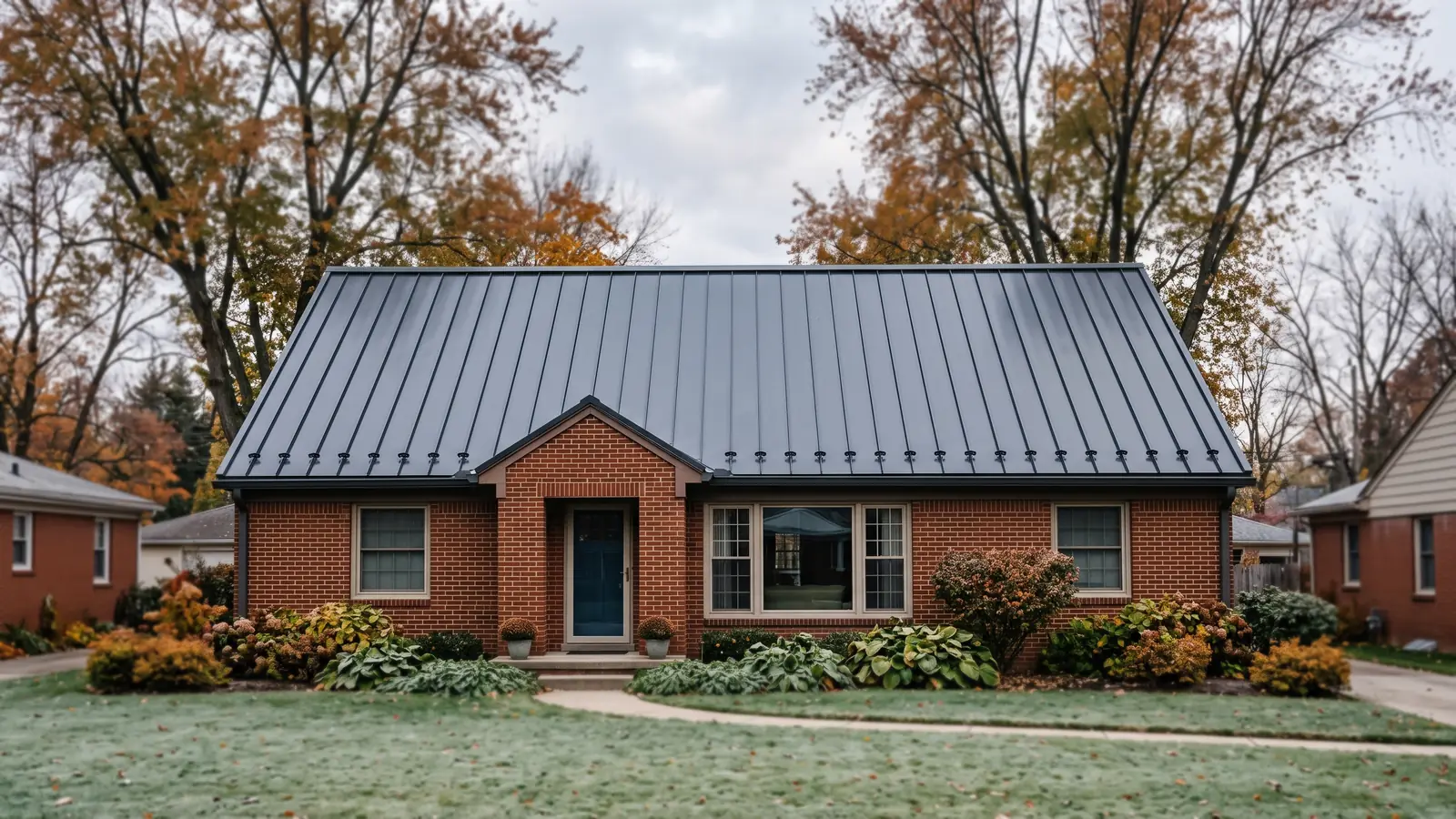
Stone-Coated Steel Roofing Profiles
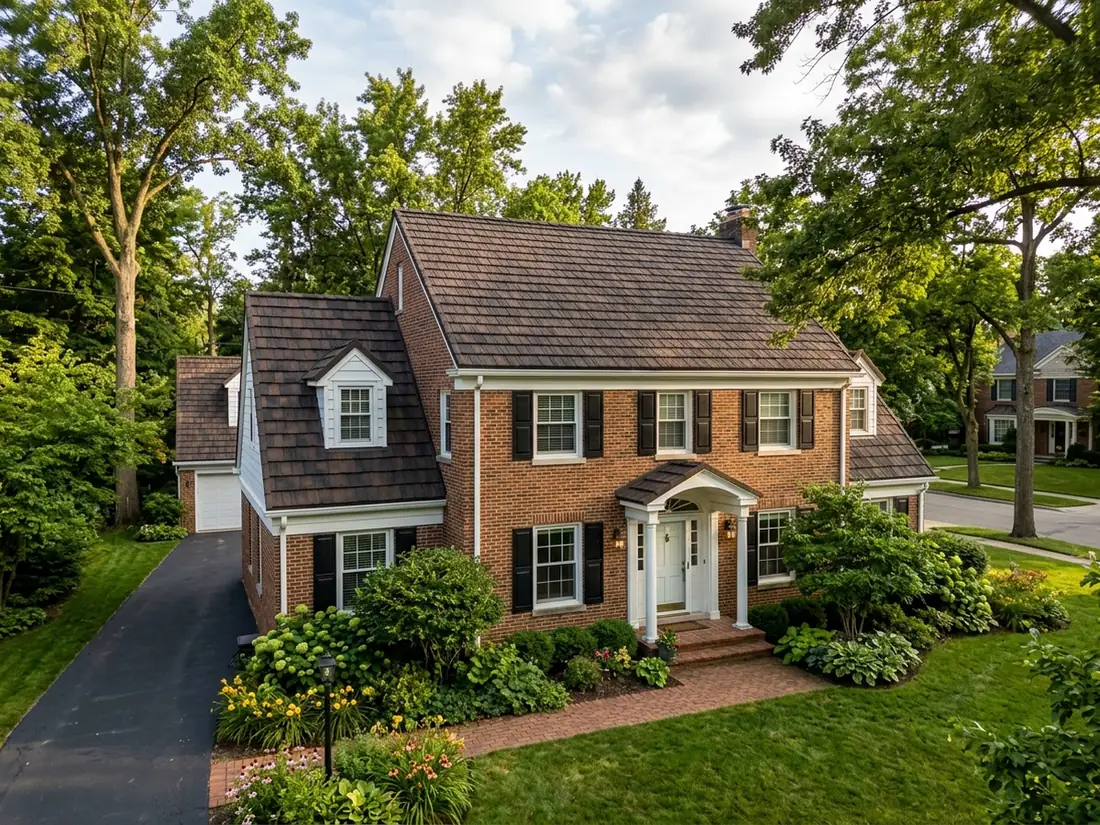
Stone-Coated Shake Panels
Shake panels are pressed with deep, uneven butt edges and a split-wood texture, then coated in brown, grey or blended granules so the roof reads like heavy cedar shake from the street. Each panel covers several shakes' worth of roof at once.
The build is the same for every profile. The core is steel with a zinc-aluminum alloy coating. Stone granules are bonded to it with an acrylic polymer adhesive, and a clear acrylic overglaze seals the top. The finished panel weighs about 1.5 pounds per square foot. HomeGuide's rundown of the major brands shows them making panels in 26 gauge.
Shake is the profile we'd look at first for a colonial or a Cape Cod with a cedar look in mind. We think it also hides small dents better than a flat painted panel, since the surface was never flat to begin with.
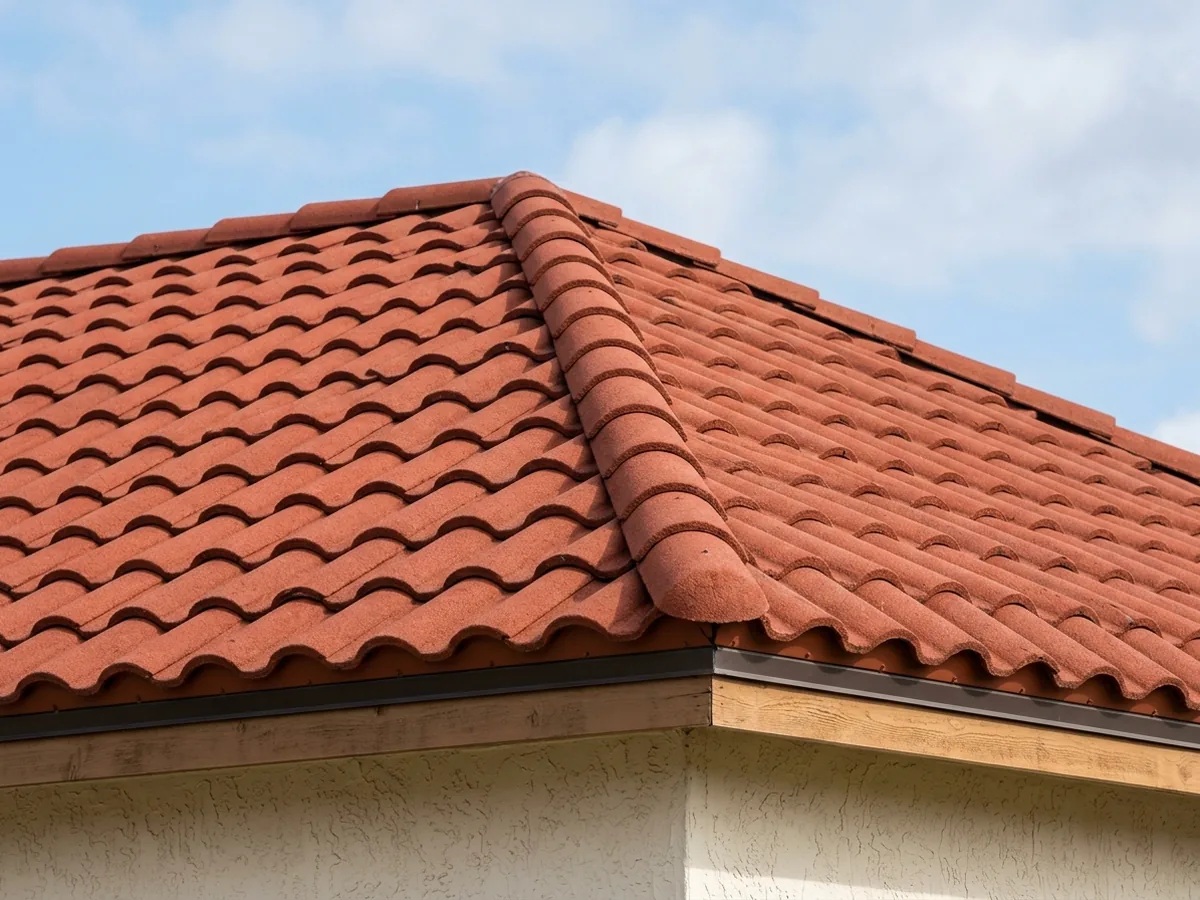
Stone-Coated Tile Panels
Tile panels copy high-arch Spanish barrel tile or low, flatter villa tile. HomeGuide lists tile as the most expensive stone-coated profile. On a Mediterranean-style house it gives the look of clay tile in steel panels that weigh about 1.5 pounds per square foot.
Tile profiles stand taller than shake or shingle panels. That makes the eave closure, the rake trim and the flashing at sidewalls more involved, and that detail work is what separates a clean tile roof from one that leaks at the edges.
Stone-Coated Shingle Panels
Shingle-profile panels are the flattest and the cheapest of the three. They look like a heavier, more textured architectural asphalt roof. Compared with painted metal shingle roofing, the granule coat gives a matte stone surface instead of a smooth painted one, and it softens the sound of rain.
For a ranch or split-level where the owner wants a roof that looks like shingles and has no visible metal at all, this is the most practical stone-coated pick.
Batten vs Direct-to-Deck Installation
Stone-coated panels go on one of two ways.
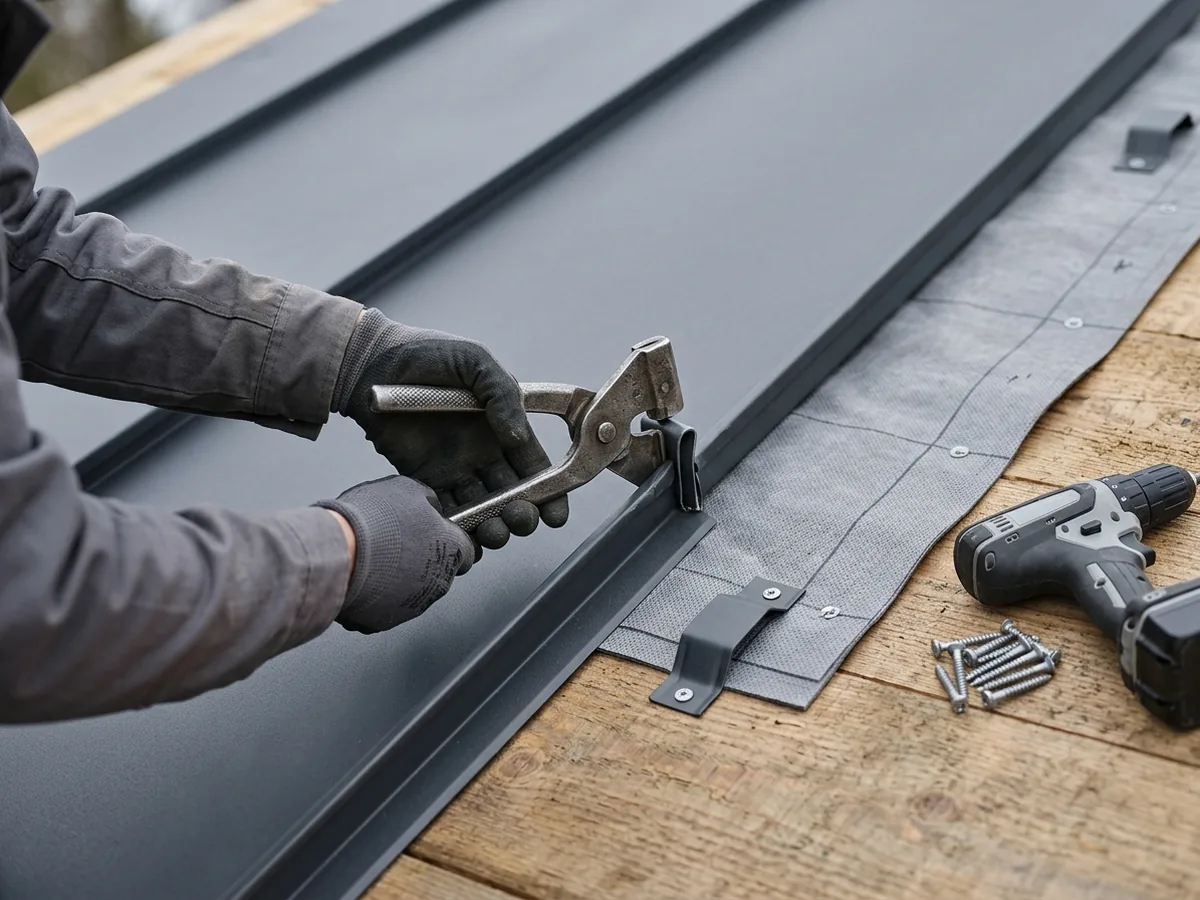
On battens, the contractor fastens a grid of 2x2 wood battens over the deck and hangs the panels on it, which leaves about a 1½-inch air space under the steel. That gap moves air under the roof and adds some sound dampening. Battens are also the usual choice when the new roof goes over an old one, because the grid makes a flat, even plane over whatever is underneath.
Direct-to-deck means the panels fasten straight to the sheathing. It lets the crew cut and fit the panels more precisely, which is why one manufacturer recommends it for roofs with dormers, valleys and other complex features. It also costs less than a batten install.
Fastening matters as much as the method. One manufacturer lists four installation methods, from direct-to-deck with a standard fastening schedule up to battens with an enhanced schedule for the highest wind ratings. Ask which one the quote is based on.
Why Livonia homeowners call Livonia Metal Roofing
- Estimate in writing, at no cost
- Gauge, panel profile and paint finish named in the quote
- Re-roof permit listed in the written scope
- One independent local metal roofer per request
- Homeowners pay nothing for the referral
UL 2218 Class 4 Impact Rating
UL 2218 drops steel balls onto roofing samples from set heights. Class 4, the top class, means a sample survived a 2-inch steel ball dropped from 20 feet. Class 3 uses a 1.75-inch ball dropped from 17 feet. Stone-coated steel commonly carries Class 4, and some products also hold an FM "Very Severe Hail" classification.
That's relevant in Wayne County. NOAA's storm records show 23 hail reports in the county from 2015 through 2024, 14 of them at 1 inch or larger. The largest was 1.75 inches, and a 1.50-inch report in Redford Heights in July 2023 was the closest to Livonia.
Class 4 isn't a promise that the roof won't mark. Steel can still dent, and a metal roofing maker that sells Class 4 panels says so itself. What the rating does tell you is that the roof is in the toughest group tested. HomeGuide notes that a new stone-coated roof may qualify for a homeowner's insurance discount, so ask your insurer before you choose. Any rating belongs to a specific product, so get the data sheet for the panel on your quote.
What Goes Into a Stone-Coated Steel Quote
HomeGuide's 2026 national guide puts stone-coated steel at $7 to $13 per square foot installed. For how that compares with standing seam, metal shingles and asphalt, see our cost section on the homepage. The lines that move a stone-coated quote:
Profile
Shingle costs least, tile most- Battens or direct-to-deck
- Tear-off and disposal, or a batten overlay on the old roof (metal roof over shingles explains when the code allows that)
- Deck repairs once the old roof is off
- Ice barrier at the eaves and valleys (underlayment and ventilation)
- Ridge, hip and rake trim, and the vent at the ridge
Things to Know About Owning One
Stay off it
HomeGuide notes that walking on the panels can dent them and may void the warranty. Leave gutter cleaning from the roof and holiday lights to someone who knows where to step.Granules wear slowly
Some granule loss over the years is normal. Painting a stone-coated roof may void its warranty, according to HomeGuide.Fire rating is a system rating
Metal itself doesn't burn, but a Class A rating covers the panel, underlayment and deck together. Our metal shingle roofing page explains what the code counts as Class A.Snow
One manufacturer says the granule surface prevents the sudden snow slides you get from painted metal. We'd still check the eave over doors and decks. See snow guards for metal roofs.Permit and contractor licence
Both apply to a Livonia re-roof and are covered on our metal roof replacement page.
Livonia Metal Roofing connects you with one independent local contractor. The contractor measures, quotes and installs the roof; we don't do the work ourselves.