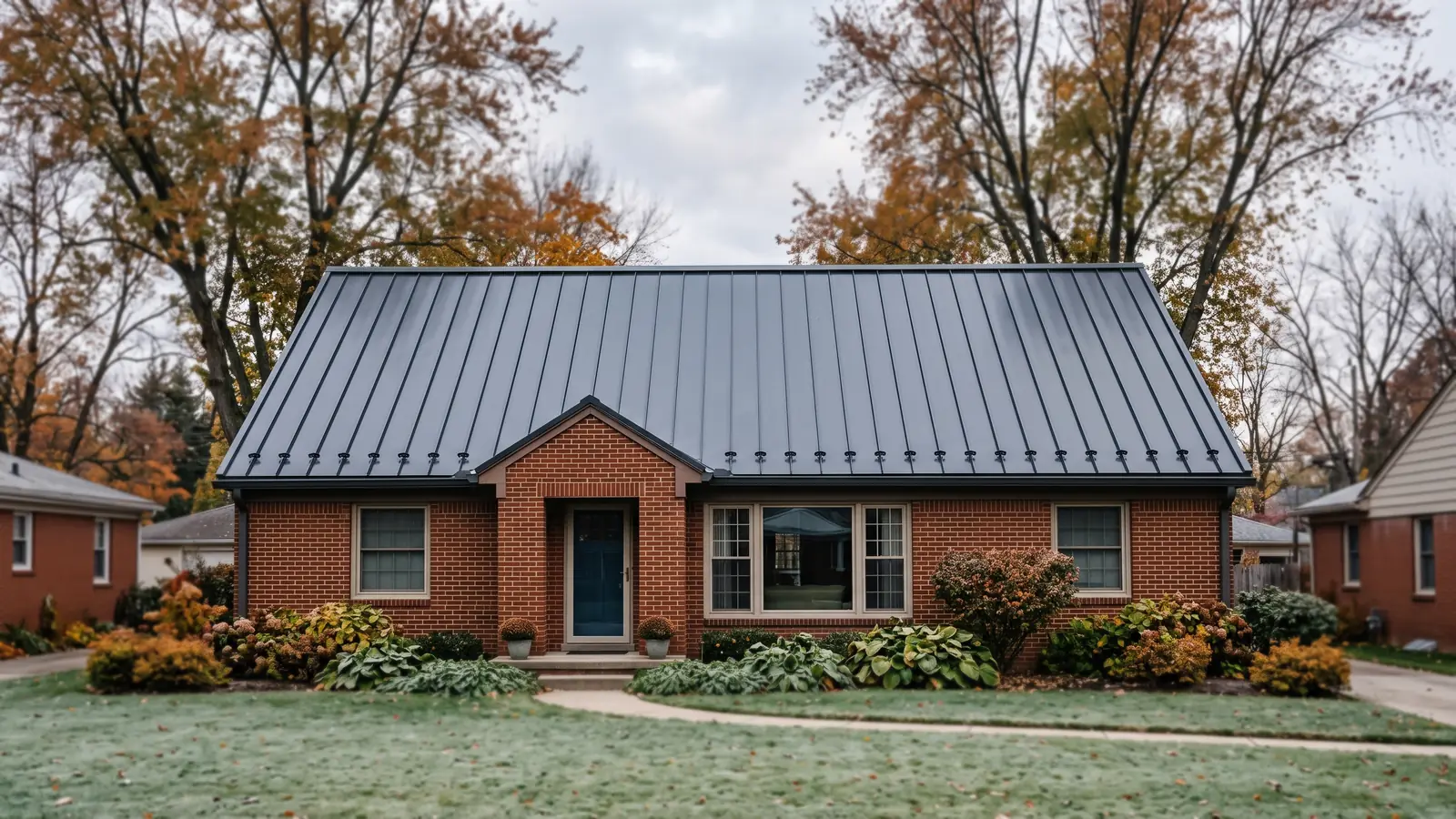
Snow Guard Types for Metal Roofs
Two kinds of snow guard do most of the work on U.S. metal roofs: individual pads and continuous rails, according to Metal Construction News. Which one fits comes down to your panel profile, how the guard attaches to it, and how much snow it has to hold.
Pad-Style Snow Guards
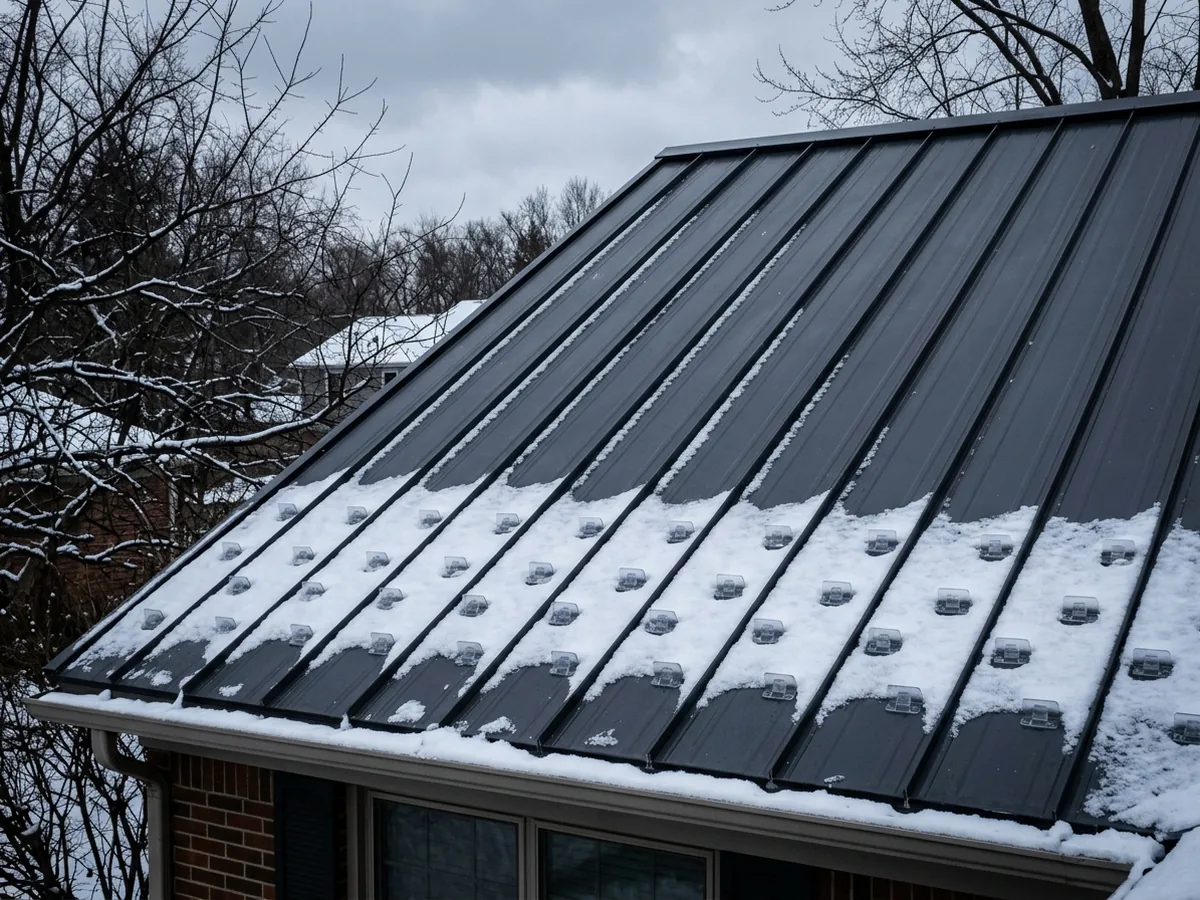
Pads are small separate pieces, usually polycarbonate, laid across the slope in a grid or staggered pattern. They don't build a wall against the snow. They add friction, so the snowpack slumps and works its way off in chunks instead of sliding as one slab. A snow guard maker writing in Design & Build with Metal compares the effect to a pinball machine.
Pads attach with adhesive or sealant, or with fasteners through the panel. Glued pads should go on above 40°F and need 7 to 14 days to cure. In Livonia that makes adhesive pads a spring-to-fall job. A pad doesn't hold as much as a rail, so a pad layout spreads over more of the roof.
Rail and Pipe Snow Fence Systems
A rail system is one continuous bar, or one or two pipes, running parallel to the eave on brackets. Rails hold more than glued pads, so they're usually installed as a single row a few feet up from the eave. A long or steep slope can still need a second or third row. Panel length, slope and the roof's design snow load decide that, and the guard maker should calculate it for your roof.
Rails are usually high-strength aluminum with stainless steel set screws. Fence-style rails can hold a strip of the roof panel itself in their face, so the guard matches the roof and fades at the same rate. Small ice clips along the rail, or a flag hanging below it, keep snow and ice from sliding out underneath.
Clamp-On Guards for Standing Seam
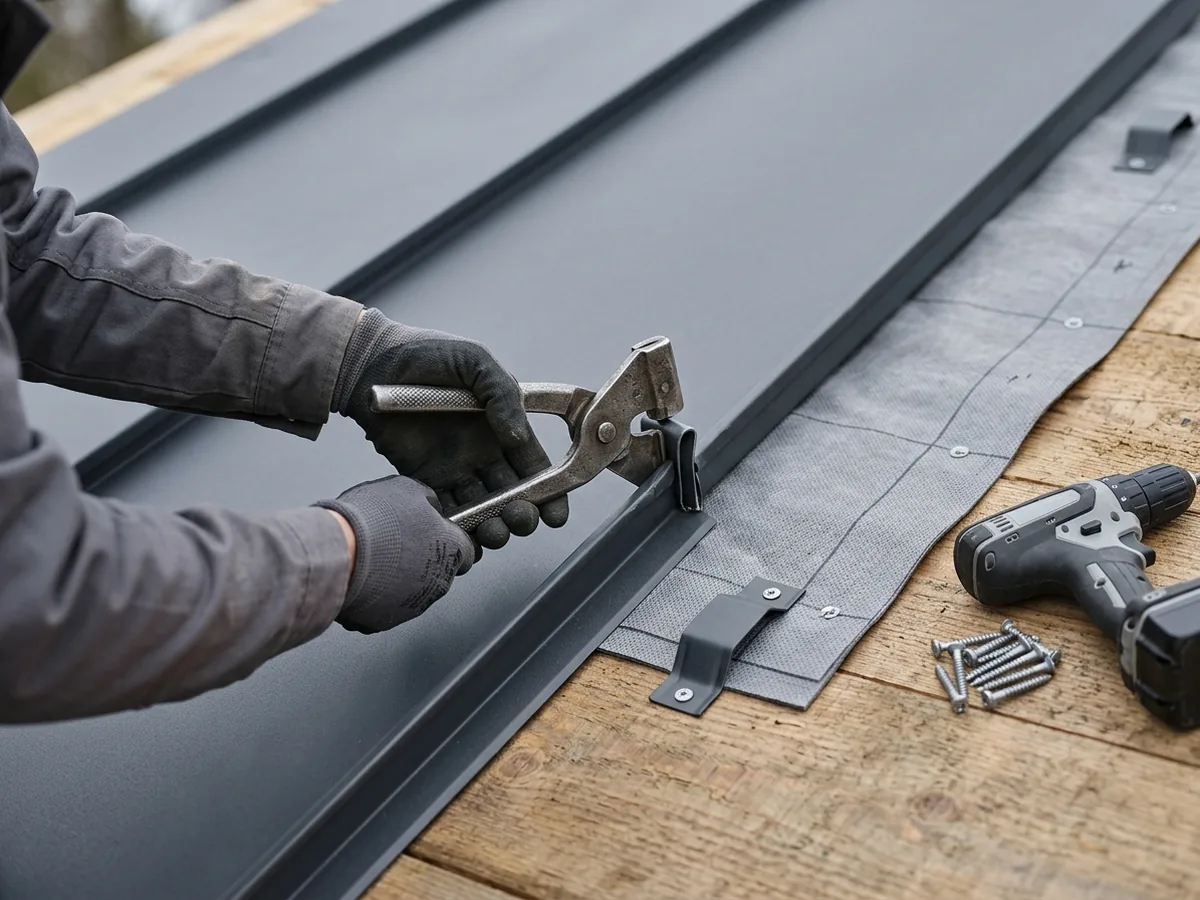
On standing seam metal roofing, the rail brackets clamp onto the raised seams with set screws that grip the seam without piercing it. No holes go through the panel, so there's nothing new to seal. The clamp has to match the seam: snap-lock, single-lock and double-lock seams are different shapes. The set screws are tightened with a calibrated torque wrench to the clamp maker's figure, going back over each screw until all of them hold. Rail systems can be installed in almost any weather, so a clamp-on retrofit doesn't have to wait for spring.
Screw-Down Guards for Exposed-Fastener Roofs
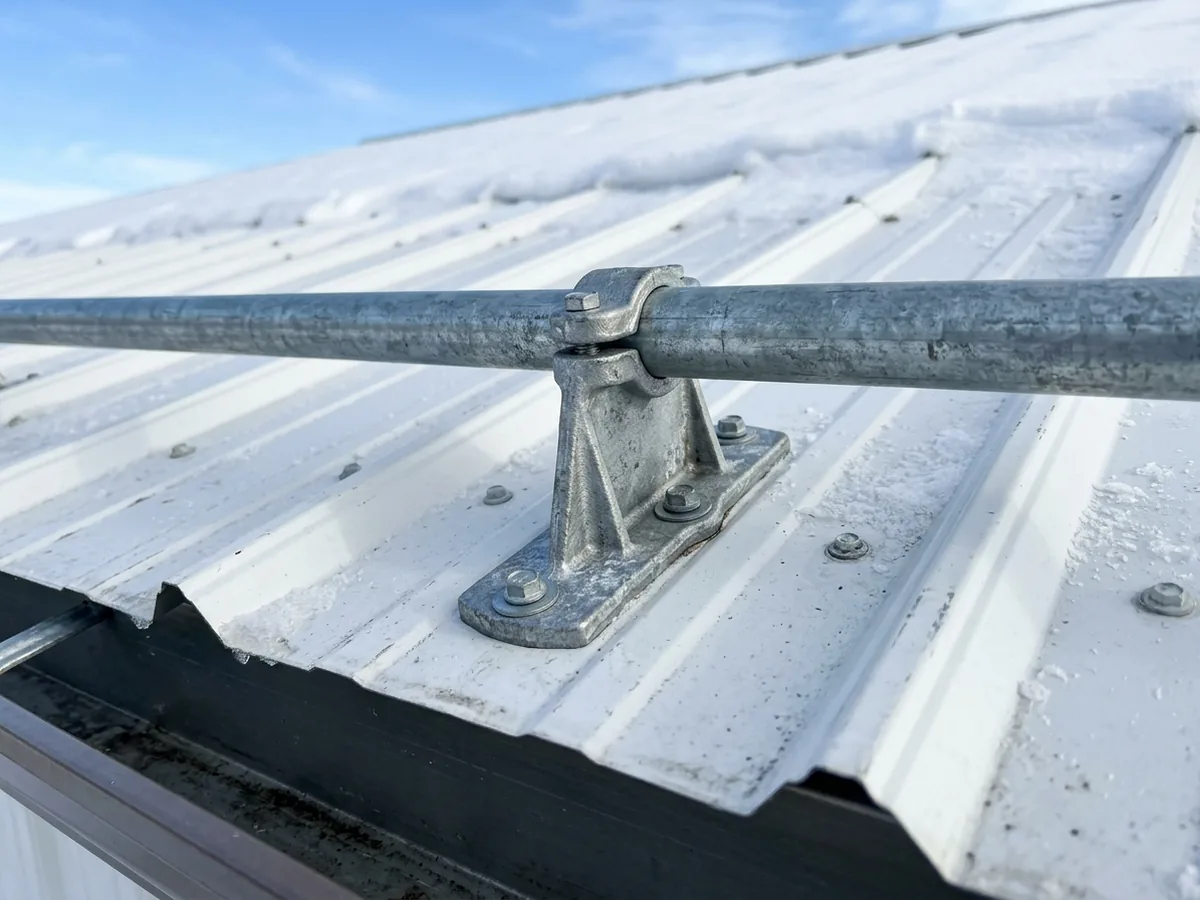
Ribbed and corrugated panels have no raised seam to clamp, so their brackets fasten through the panel into the structure underneath. Ceco Building Systems describes brackets with butyl sealant already applied under the base, where the bracket shades it from the sun so it doesn't dry out and crack. Their pipe-style brackets take 1-inch pipe and commonly have six attachment points. Every bracket is a set of new holes in the roof, so the screws need to land in framing, not just in the sheet. More on these panels is on our exposed fastener metal roofing page.
Heat Cable at Eaves and Valleys
Heat cable doesn't hold snow back. It keeps a path open for meltwater. Easy Heat's installation guide runs self-regulating cable in a pattern from the roof edge to just above the overhang, then through the gutter and down each downspout, with a loop about 3 feet up each valley and back. Metal roofs get their own clip layout. The circuit must have ground-fault protection.
The same guide calls icicles a symptom of a warm roof. Cable treats that symptom at the edge, but the cause is heat getting into the attic. The fix for that is on our metal roof underlayment and ventilation page.
Why Livonia homeowners call Livonia Metal Roofing
- Estimate in writing, at no cost
- Gauge, panel profile and paint finish named in the quote
- Re-roof permit listed in the written scope
- One independent local metal roofer per request
- Homeowners pay nothing for the referral
Livonia Snowfall and Snow Load
Detroit Metro Airport, the NOAA normals station closest to Livonia, averages 45.0 inches of snow a year on the 1991-2020 normals. January brings 14.0 inches and February 12.5. January's normal low is 19.2°F and its normal high only 32.3°F, so snow can stay on a roof between storms.
The 2015 Michigan Residential Code sets the ground snow load for Wayne County at 20 pounds per square foot (Table R301.2(5)). The only Wayne County exception listed is the City of Northville, at 25. That number is for the roof framing. Snow guard makers work from the roof's design snow load together with panel width, slope and run length when they size a system.
On metal, snow can slide at pitches below 1/12, says Rocky Mountain Snow Guards, so almost any metal house roof here can shed its load. Their advice is to consider guards on every slope that drops snow onto a walkway, driveway or deck, and on steeper roofs to spread them over the whole slope, more densely toward the eave. Ceco's list of what a sliding load hits includes people, cars, fascia and gutters, plus the foundation when melt piles up against it.
Where Snow Guards Go on a House
Not every slope needs them. The ones that do sit above:
- the front entry and back door
- a deck, patio or walkway
- the driveway or where cars park
- a lower roof that would take the hit, such as a porch roof or an attached garage
- gutters, AC units and planting beds you'd rather not rebuild in March
A slope that drops onto open lawn may need nothing at all.
What the Quote Should Say
Ask for the guard type and how it attaches (clamp, screw-down or adhesive), how many rows, and whether the layout came from the guard maker's calculation for your roof. It should also say whether ice clips or a flag are included and whether the finish matches the panels.
On an existing roof, the contractor checks the seam profile before ordering clamps, or finds the framing before placing screw-down brackets. Gutters below a metal roof take a beating from sliding snow; see copper gutters for how they're hung under metal. If a bracket ever starts to leak, that's a metal roof repair job, not a reason to pull the guards.