
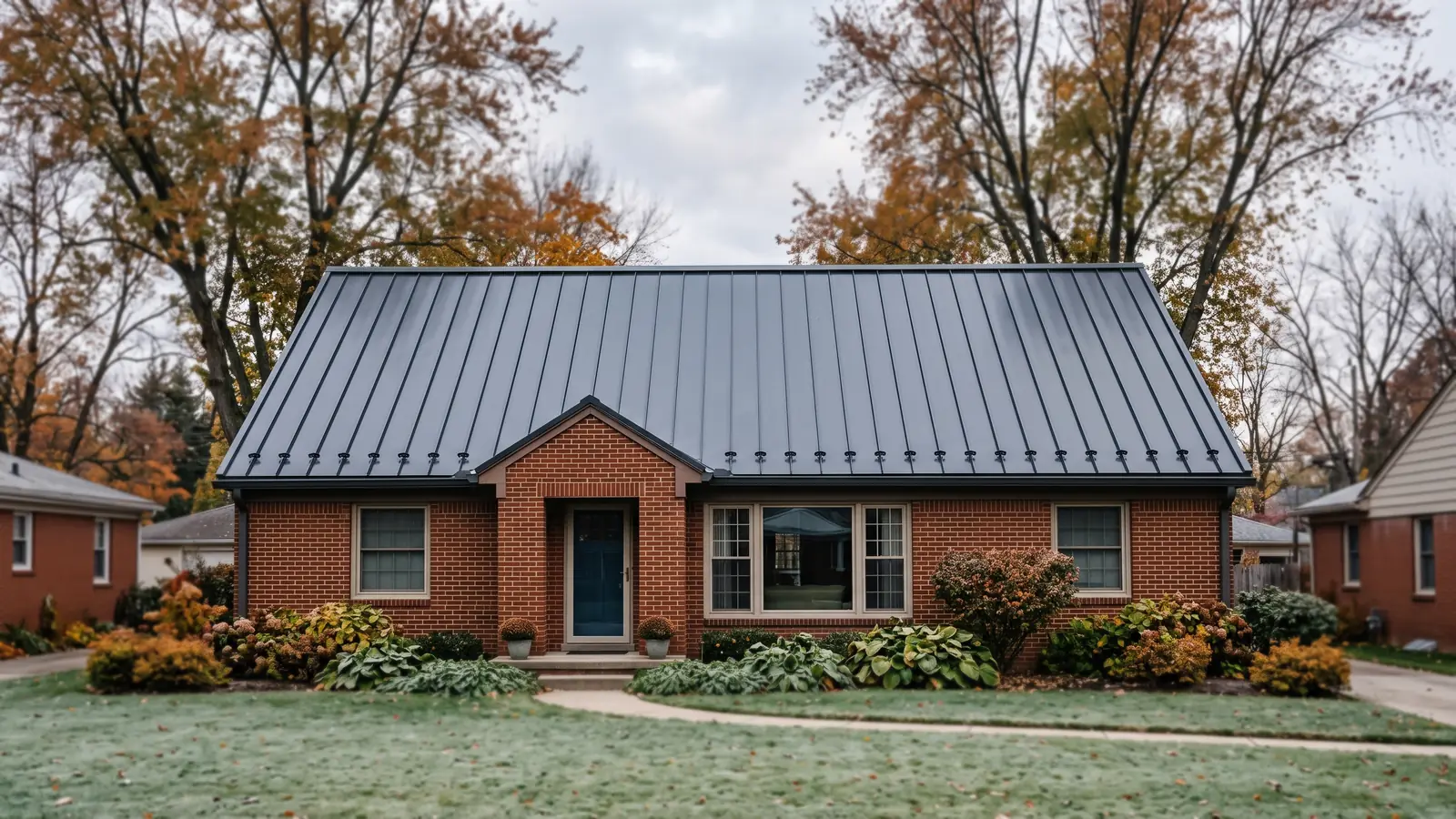
Metal Roof Coating and Restoration Options
A coating is a thick, rubbery membrane rolled or sprayed over the whole roof. Paint is a thin color finish. The two systems below are the coatings in common use on metal, and the three after them are the prep and repaint work that decides whether either one lasts.
Silicone Roof Coatings
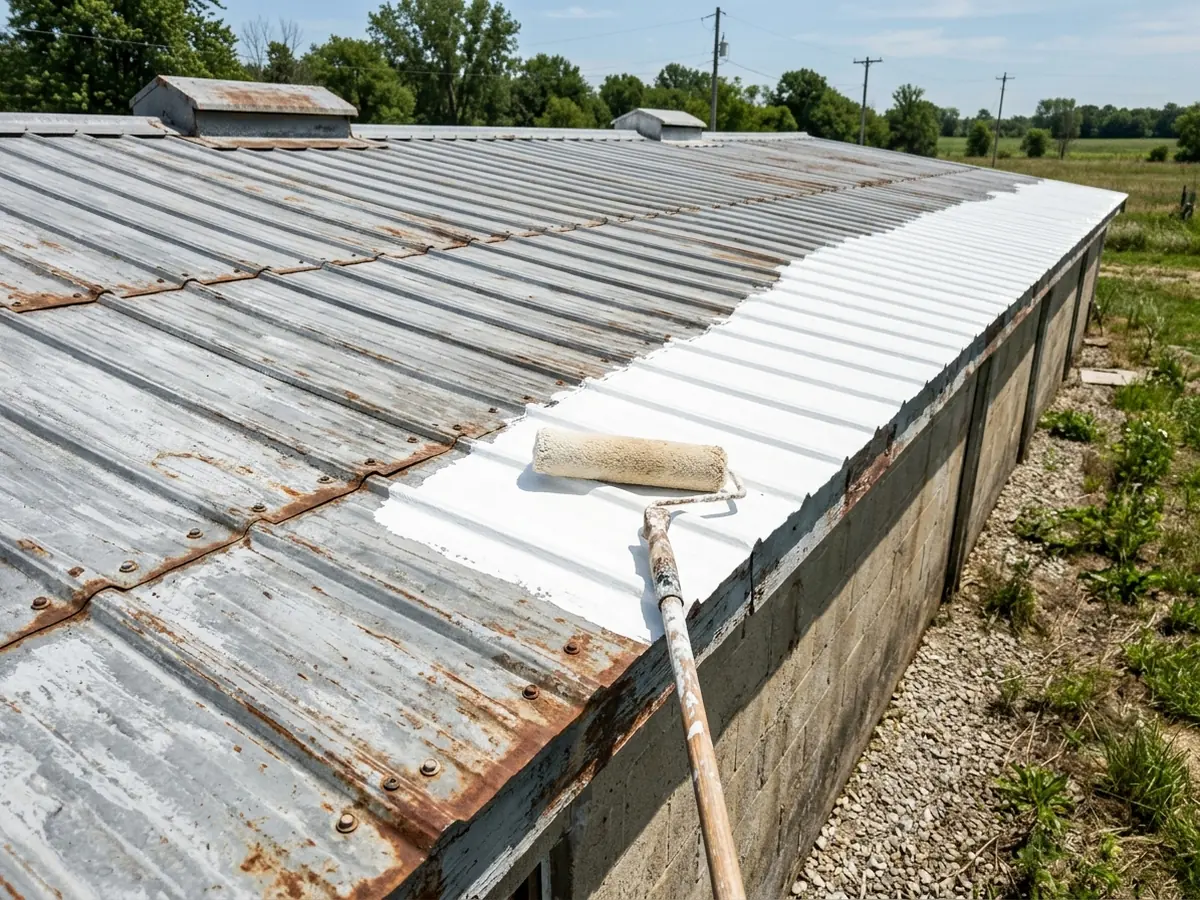
Silicone is the coating for metal roofs where water sits. American WeatherStar, which makes both silicone and acrylic coatings, says silicone resists ponding water (water still on the roof after 48 hours) and holds up to UV without chalking or turning brittle. Silicone isn't water-based, so it has a wider cold-weather application window than acrylic. The same maker puts the life of a properly applied silicone coating at 10 to 20 years or more.
The life depends on thickness. In American WeatherStar's metal roof guideline, a 20-mil dry silicone system is the 12-year option, 25 mils the 15-year and 30 mils the 20-year. Ask any quote for the dry mil thickness and the spread rate per 100 square feet. Silicone also collects dirt, it's slippery when wet, and it's hard to spray. The maker suggests a pressure wash 6 to 12 months after it goes on.
Acrylic Elastomeric Coatings
Acrylics are water-based, cost less than silicone, and clean up with water. They also hold their color and look better over time, which makes them the pick for a pitched metal roof you can see from the street. American WeatherStar recommends acrylic only on steep-slope metal roofs where water doesn't pond, because standing water breaks it down.
Acrylic needs outdoor temperatures of 50°F or higher to bond properly, and it can freeze before it cures. In Livonia, where January's normal high is about 32°F, that makes acrylic a late-spring-to-early-fall job. Acrylic films also lose thickness as they age.
Rust Treatment and Primers
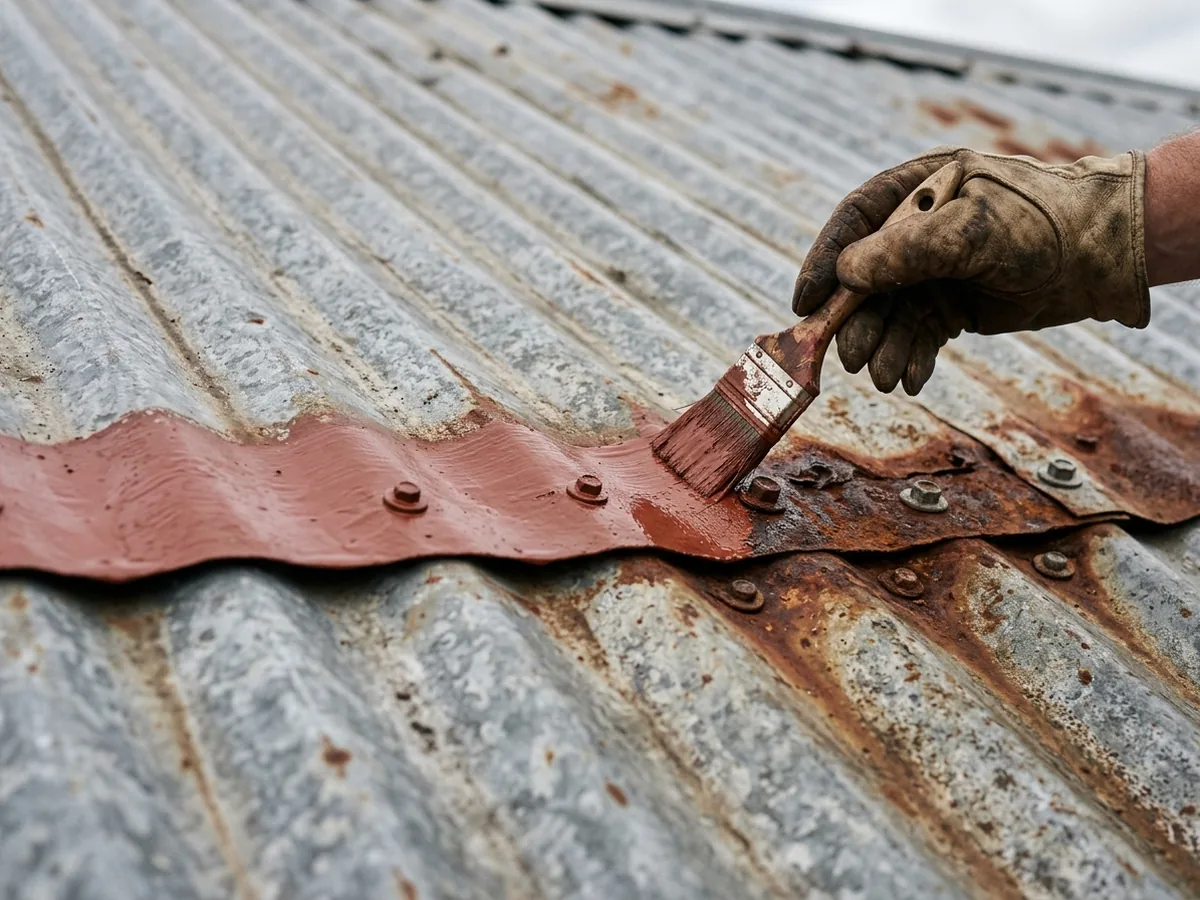
Rust work starts with an honest look, including the underside of the panels where possible. American WeatherStar's guideline is blunt: hidden rust between panels or on the underside can't be fixed with a coating. The roof is pressure-washed at 3,000 psi or more to strip dirt, loose paint and oil. Then every rusted area gets a rust primer, at about one gallon per 100 to 200 square feet depending on how bad it is.
Factory-painted panels are primed too, with an adhesion test to make sure the coating will grip the old paint. Brand-new galvanized patch panels need to weather 90 days or get a surface conditioner first. Panels rusted through need replacing before any coating goes on. That's metal roof repair work.
Seam and Fastener Sealing
On an exposed-fastener roof, the leaks are at screws and laps, so that's where restoration spends its time. The guideline calls for tightening every fastener and swapping stripped ones for larger-diameter screws, with a new screw added beside each one. Missing screws get replaced, and every fastener head is sealed under brush-grade urethane or silicone.
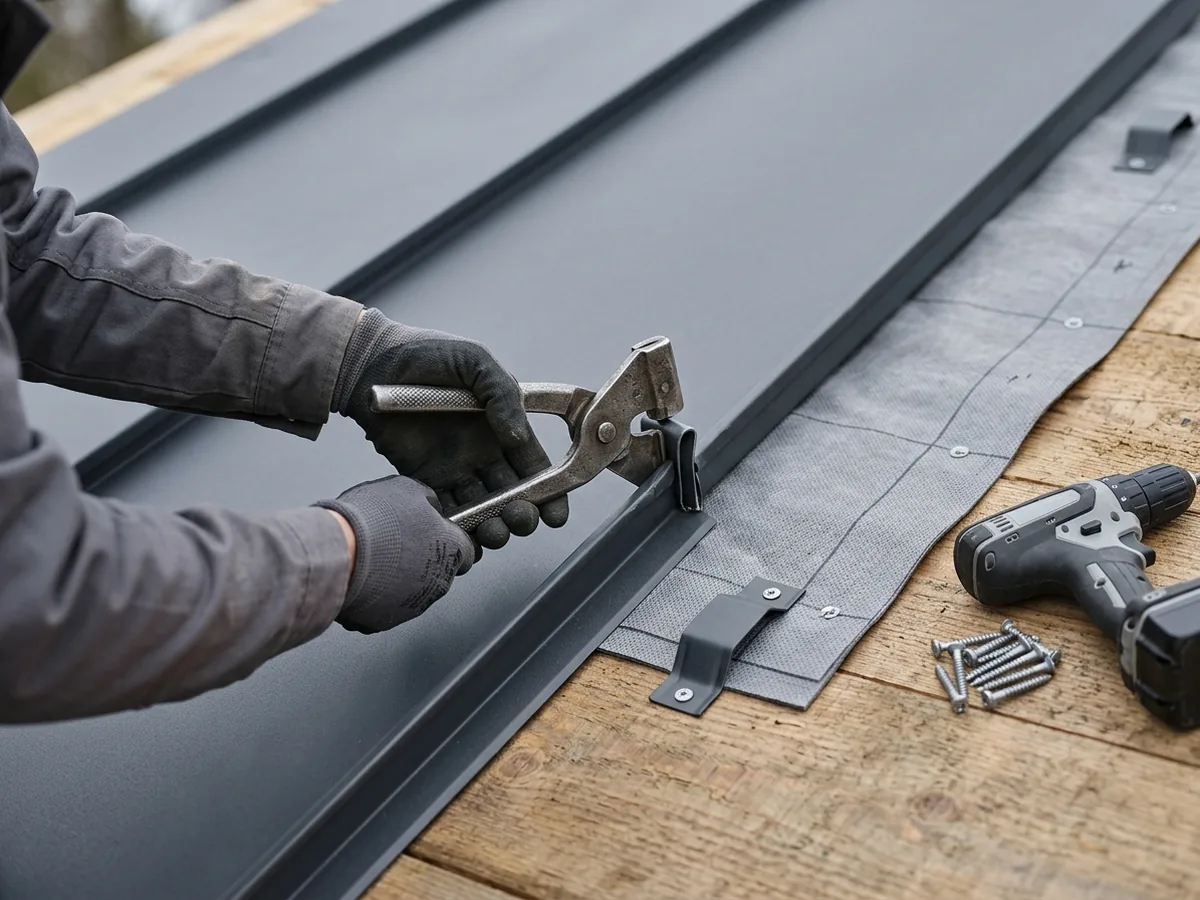
Seams get the same treatment: a 4-inch band over horizontal laps, 2 inches over vertical seams, and 4 inches up and out around each pipe or curb. Loose standing seams are re-seamed to the panel maker's instructions before any coating. Reinforcing polyester fabric goes into the details. How long the original screw washers last is covered on our metal roof repair page.
Repainting Painted Steel
Repainting is a color job, not a waterproofing job. Todd Miller, president of metal roofing maker Isaiah Industries, says a factory finish that's still bonded, not peeling or flaking, is a good base. The process: a light power wash with water, trisodium phosphate and detergent, then a sprayed primer, then the topcoat. Air-dry PVDF paints are available for a longer-lasting finish. He also warns that a repainted finish will rarely last as long as the original, and that repainting voids whatever finish warranty is left.
For what the factory finishes are (PVDF or SMP) and why they chalk, see our standing seam metal roofing page.
Why Livonia homeowners call Livonia Metal Roofing
- Estimate in writing, at no cost
- Gauge, panel profile and paint finish named in the quote
- Re-roof permit listed in the written scope
- One independent local metal roofer per request
- Homeowners pay nothing for the referral
Coat, Repair or Replace?
The Roof Coatings Manufacturers Association says a properly applied coating can usually extend a roof's life by up to 10 years or more, depending on the coating type, the conditions and the film thickness. As the coating wears, it can be recoated. RCMA is just as clear about the limit: leaks have to be found and fixed, and the roof dried, before coating. Don't expect the coating to find leaks.
Our rough guide:
One or two leaks, sound paint
- Chalky paint, surface rust, many tired screws, solid panels: coating or repaint.
Rust holes, soft deck, rust between laps
Coatings on Barns and Wood-Framed Roofs
One detail matters for pole barns and garages. American WeatherStar's guideline qualifies a metal roof for its full no-dollar-limit warranty only when the panels are fastened with gasketed screws into metal purlins. Panels on wood purlins or decks, or held with nails, get a material-only warranty at best. Ask which warranty the coating maker will actually issue for your building before you choose a system.
How a Restoration Runs
- 1
Inspection
Panels, laps and the underside where reachable. Adhesion test on the old paint. - 2
Wash
High-pressure clean, then the roof dries. - 3
Fasteners and seams
Tighten, replace, add, then seal. - 4
Rust primer
Every rusted spot, at the specified rate. - 5
Details
Curbs, pipes, ridge caps and rake trim sealed and reinforced with fabric. - 6
Base and top coat
At the rate per 100 square feet the system requires, on a dry day within the product's temperature range.
For warehouse and plaza roofs, our commercial metal roofing page covers the larger-scale work. If an inspection hasn't been done yet, start with a metal roof inspection.