
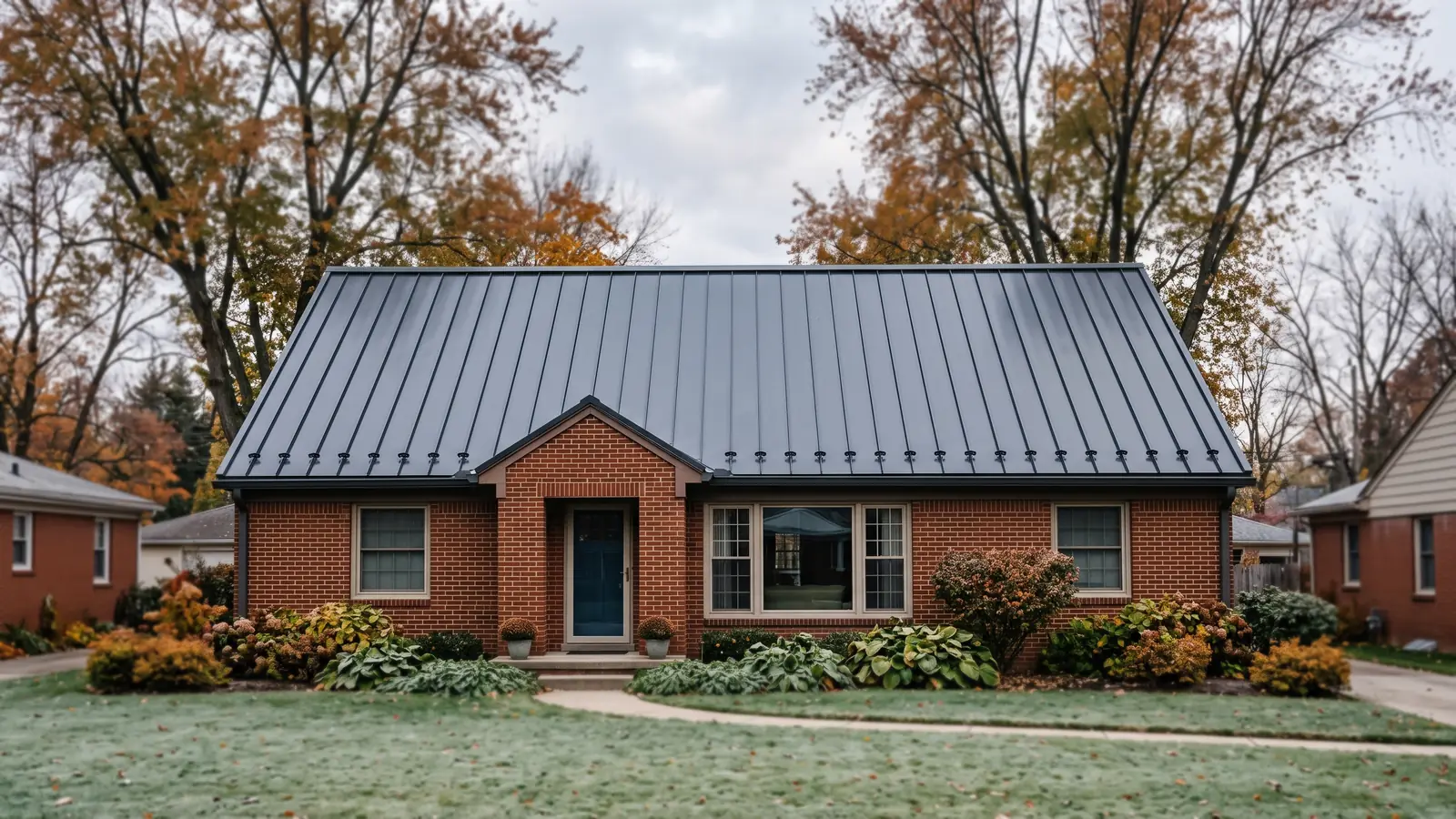
Standing Seam Metal Roof Panel Types
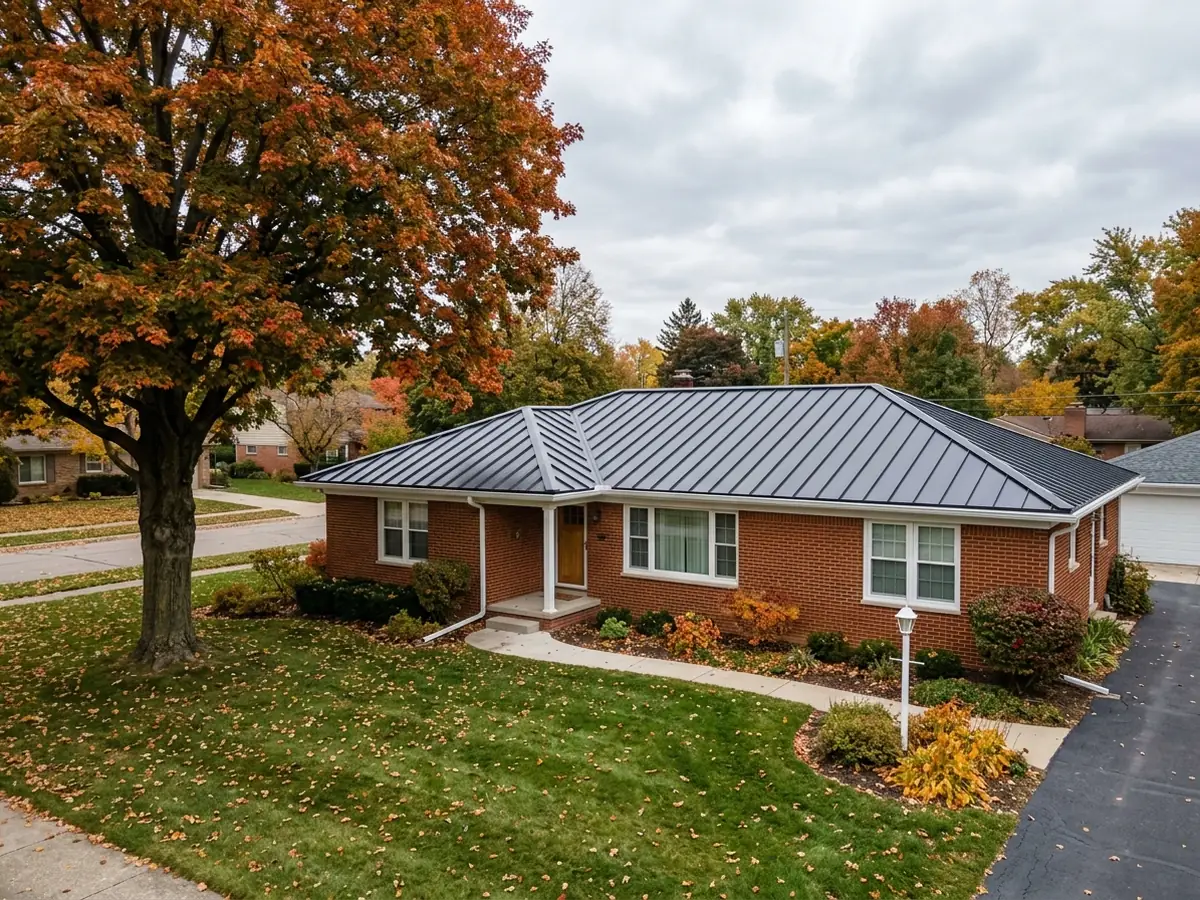
Snap-Lock Standing Seam Panels
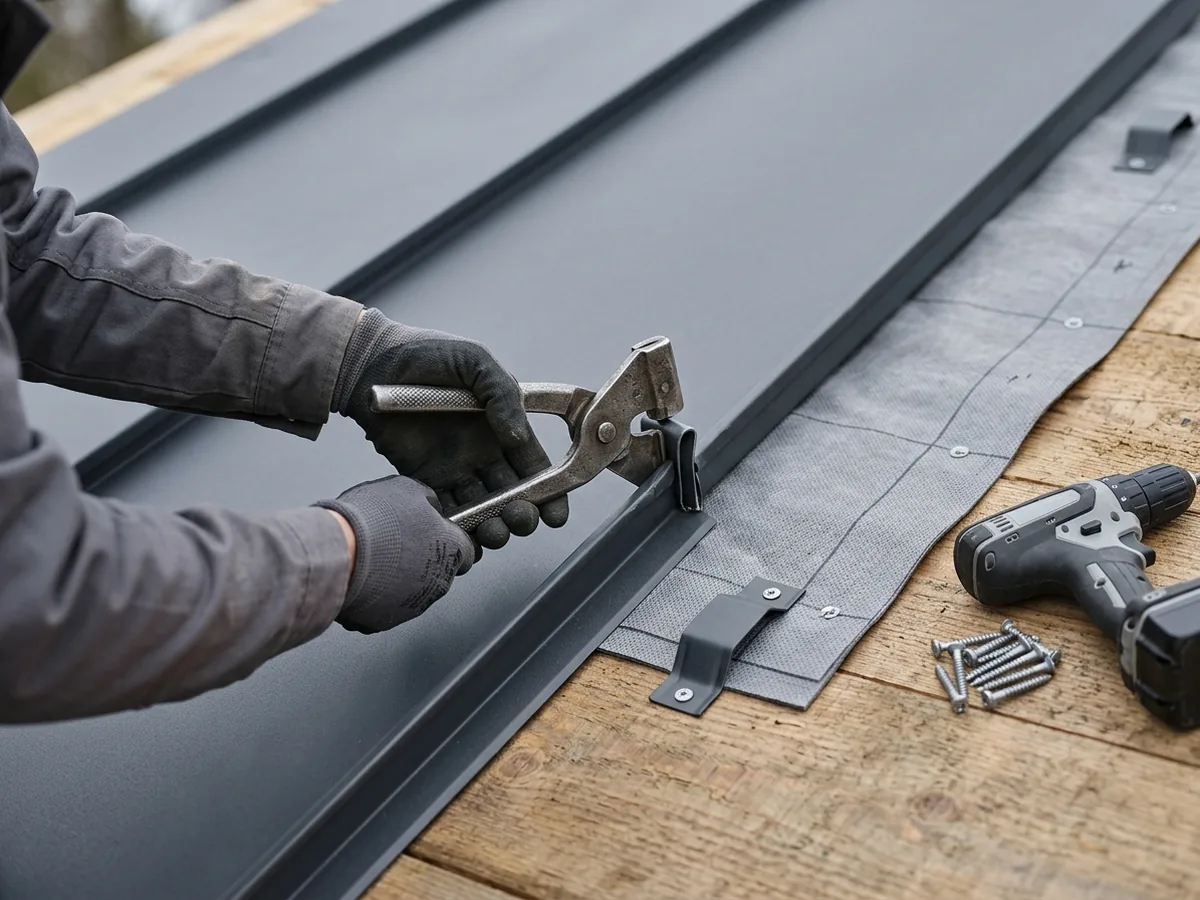
Snap-lock panels have a male leg on one edge and a female leg on the other. The installer presses the next panel's leg over the last one and it locks along its full length, with no seaming machine. Clips screwed to the deck sit inside the seam and hold the panel down. Common snap-lock profiles have seams about 1.5 inches tall.
Manufacturers rate snap-lock for roofs of 3:12 and steeper. It's designed to shed water, and sealant in the legs doesn't lower that limit. That covers the main roof on most ranches and colonials. A shallow back porch or sunroom roof usually needs a seamed panel, and the code minimum pitch for each panel type is on our low-slope metal roofing page.
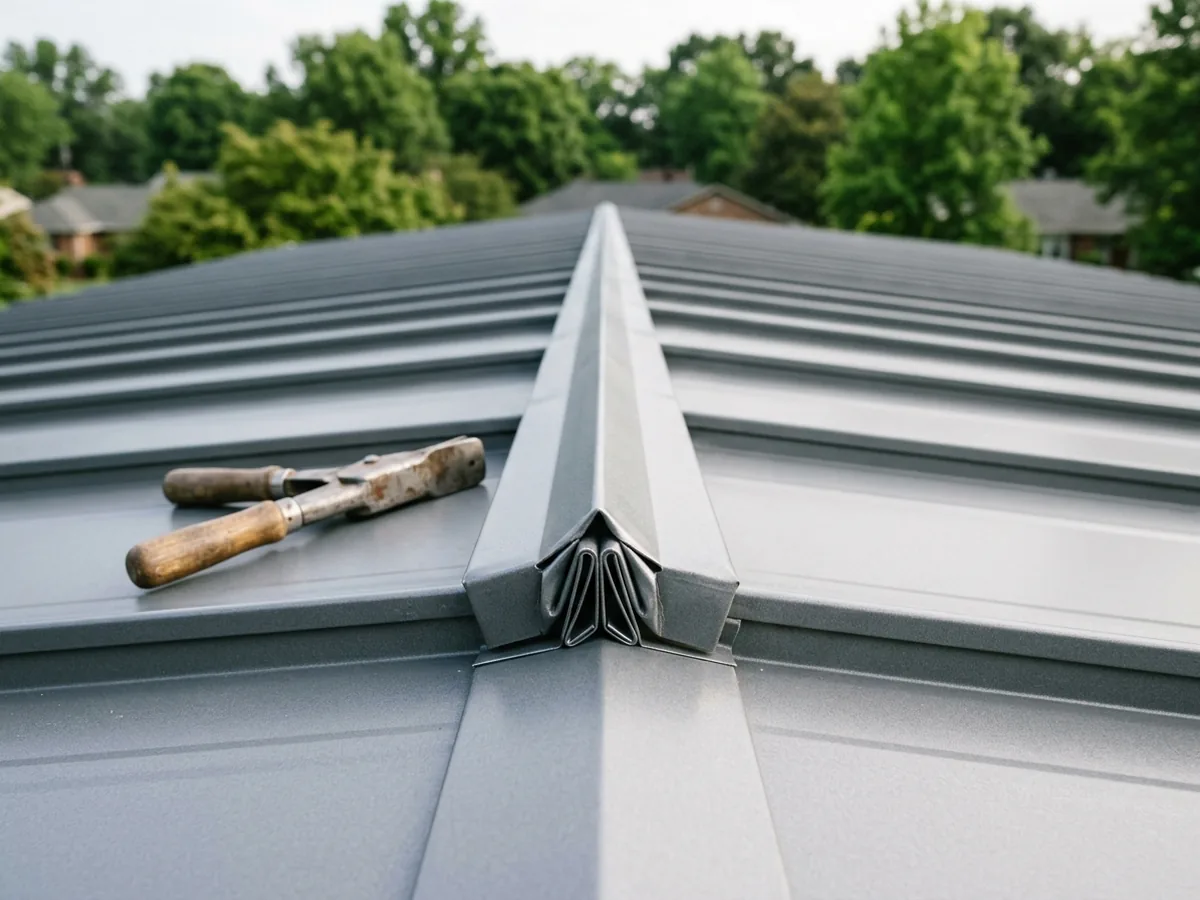
Mechanically Seamed (Single- and Double-Lock) Panels
Mechanically seamed panels are set in place, then a hand crimper or an electric seamer folds the legs together. A single-lock seam is folded once, to 90 degrees. A double-lock seam is folded twice, to 180 degrees. Double lock is the tightest and strongest standing seam joint, and the one meant for low slopes. It also takes the most labor, and a damaged panel is harder to swap out later.
Seam heights run 1, 1.5 and 2 inches. Manufacturer guidance allows mechanically seamed panels down to about 2:12, lower with sealant in the seams and the maker's approval. In Livonia that matters on a long rear slope where snow sits at the eave, or where an attached porch roof flattens out below the main roof.
Nail-Strip Standing Seam Panels
Nail strip, also called nail flange, is a snap-lock panel without clips. Its male flange has 1-inch slots spaced 6 inches apart, and the installer screws through those slots straight into the deck. Seams are 1 or 1.5 inches tall.
It's the cheapest standing seam system and the quickest to install. One panel maker puts the saving at about fifty cents a square foot against a clipped panel and says plainly that you give up performance to get it. We think nail strip makes sense on short runs: a detached garage, a dormer, a small porch. On a long main-roof slope, ask for a clipped panel instead. Outbuilding roofs are covered on our garage and pole barn metal roofs page.
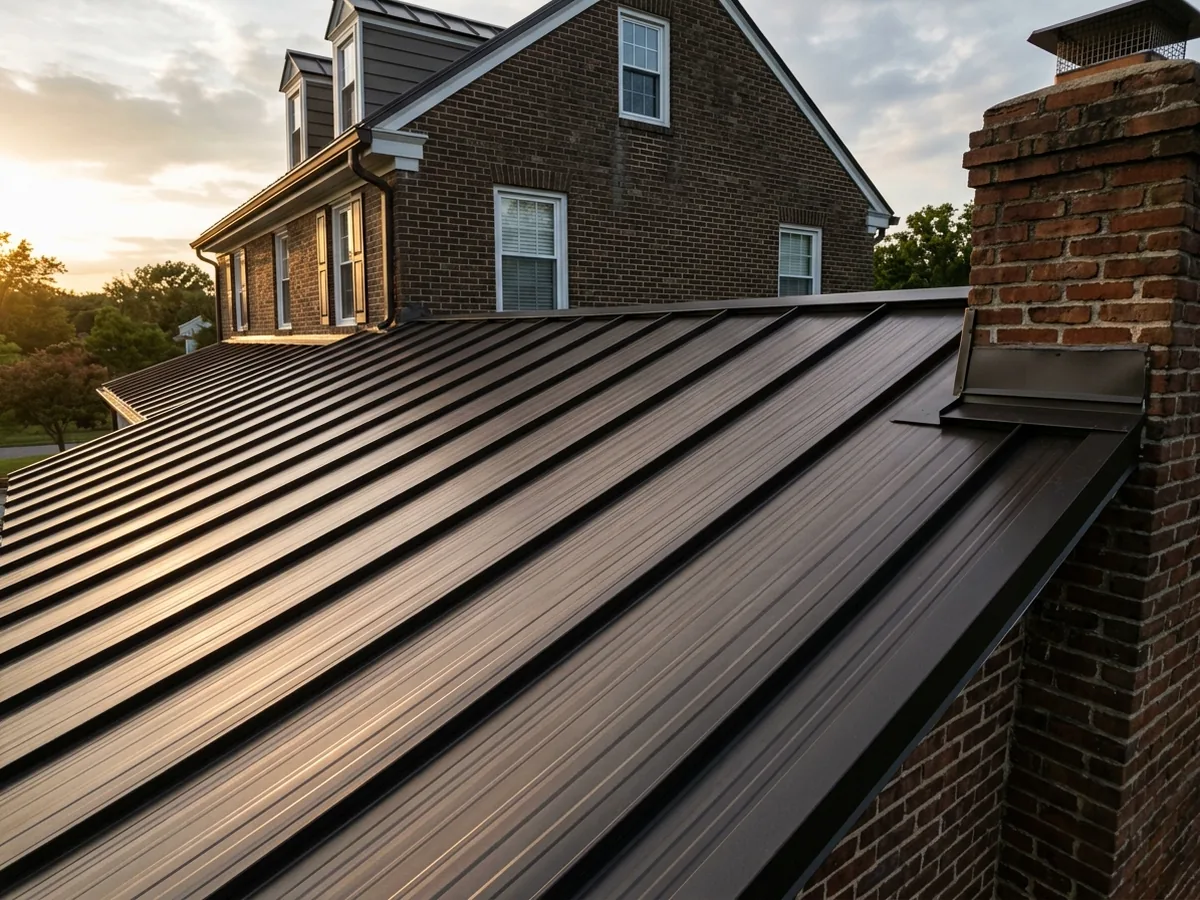
Striated and Pencil-Rib Panels
Wide flat pans can show oil canning, a visible waviness that comes with thin cold-rolled metal. It's cosmetic. It doesn't weaken the roof, and paint, substrate and weathertight warranties generally exclude it. An uneven deck, over-driven fasteners and panels pinned so they can't expand all make it worse.
Striations (shallow lines along the pan), pencil ribs, beads and clip relief are rolled into the panel when it's formed. They don't stop the steel from moving. They break up the flat surface so the waves are harder to see. Thicker metal, panels 18 inches wide or narrower, and a matte or low-gloss finish help too. On a dark, glossy roof that faces the street, we'd ask for striations.
Galvalume and PVDF-Painted Steel Panels
Three lines on the quote decide how a steel panel ages: gauge, metallic coating and paint.
Gauge first. The lower the number, the thicker the steel. Most residential roofing is 24 or 26 gauge. HomeGuide points to 24 gauge for climates with severe weather and keeps 29 gauge for small barns and sheds in mild climates.
Under the paint, the Michigan Residential Code's minimum corrosion protection for steel roofing is ASTM A792 AZ50 (Galvalume, an aluminum-zinc alloy) or ASTM A653 G90 galvanized, and paint goes over one of those. Galvalume is 55% aluminum, 43.5% zinc and 1.5% silicon. AZ50 means 0.50 ounces of coating per square foot, counting both sides, about 0.8 mil per side; AZ55 is about 1.0 mil. AZ50 is the usual base under paint, and AZ55 is used for bare, unpainted panels.
Then the paint. A finish sold as Kynar 500 has to be at least 70% PVDF resin, and it resists chalking and fading better than SMP (silicone-modified polyester), which typically has about 30% silicone in its resin. PVDF costs more. On a roof you plan to keep for decades, we think it's the better buy.
Why Livonia homeowners call Livonia Metal Roofing
- Estimate in writing, at no cost
- Gauge, panel profile and paint finish named in the quote
- Re-roof permit listed in the written scope
- One independent local metal roofer per request
- Homeowners pay nothing for the referral
What Moves the Price of a Standing Seam Roof
HomeGuide's 2026 national guide puts standing seam at $9 to $16 per square foot installed, the top of the metal range. How it compares with metal shingles, exposed-fastener panels and asphalt is laid out in our cost section on the homepage.
Within that range, these choices move a standing seam quote up or down:
Seam type
Snap-lock is the cheapest to install, mechanically seamed costs more, and double lock the most.Gauge and paint
24 gauge over 26, PVDF over SMP.Clips
Floating clips cost more than fixed ones.Panel features
Striations and pencil ribs.The roof itself
Every hip, valley, dormer and chimney means cut panels and more trim.- Tear-off, deck repairs, underlayment and snow guards.
How a Standing Seam Install Runs
Livonia Metal Roofing connects you with one independent local contractor; we don't install roofs ourselves. Here's how the contractor's job usually goes on a standing seam roof.
- 1
Measure and check the deck
Waviness starts with the deck under the panels, so a sagging or uneven deck gets fixed or shimmed before any metal goes on. - 2
Underlayment
An ice barrier goes along the eaves and in valleys, with underlayment over the rest. What the code requires and where is on our underlayment and ventilation page. - 3
Clips laid out for movement
Most panels are pinned near the ridge and move toward the eave as they heat and cool. PAC-CLAD estimates a 30-foot steel panel moves about a quarter inch over a 100°F swing; aluminum moves almost twice as much. Fixed clips hold the panel still, and floating clips let it slide. SFS suggests floating clips for panels longer than 30 feet. - 4
Panels and seams
Each panel runs in one length from eave to ridge, then gets snapped or seamed to the last one. - 5
Trim
Eave and rake trim, a ridge cap with closures, and flashing at walls and chimneys, detailed on our flashing and trim page.
Things to Know Before You Pick Standing Seam
Snow comes off in sheets
A smooth painted pan lets snow slide off in one sheet. Over a door, deck or driveway, plan snow guards that clamp to the seams without holes in the panels.Over the old roof or off
Standing seam can sometimes go over one layer of shingles; the code's layer rule is on our metal roof over shingles page.Permit and licence
A full re-roof in Livonia generally needs a city permit, and the contractor should hold a Michigan licence. Both checks are on our metal roof replacement page.Hail
Steel panels can dent. Impact ratings are explained on our stone-coated steel roofing page.