
Metal Roof Repair Services
Leaks at Screws and Panel Laps
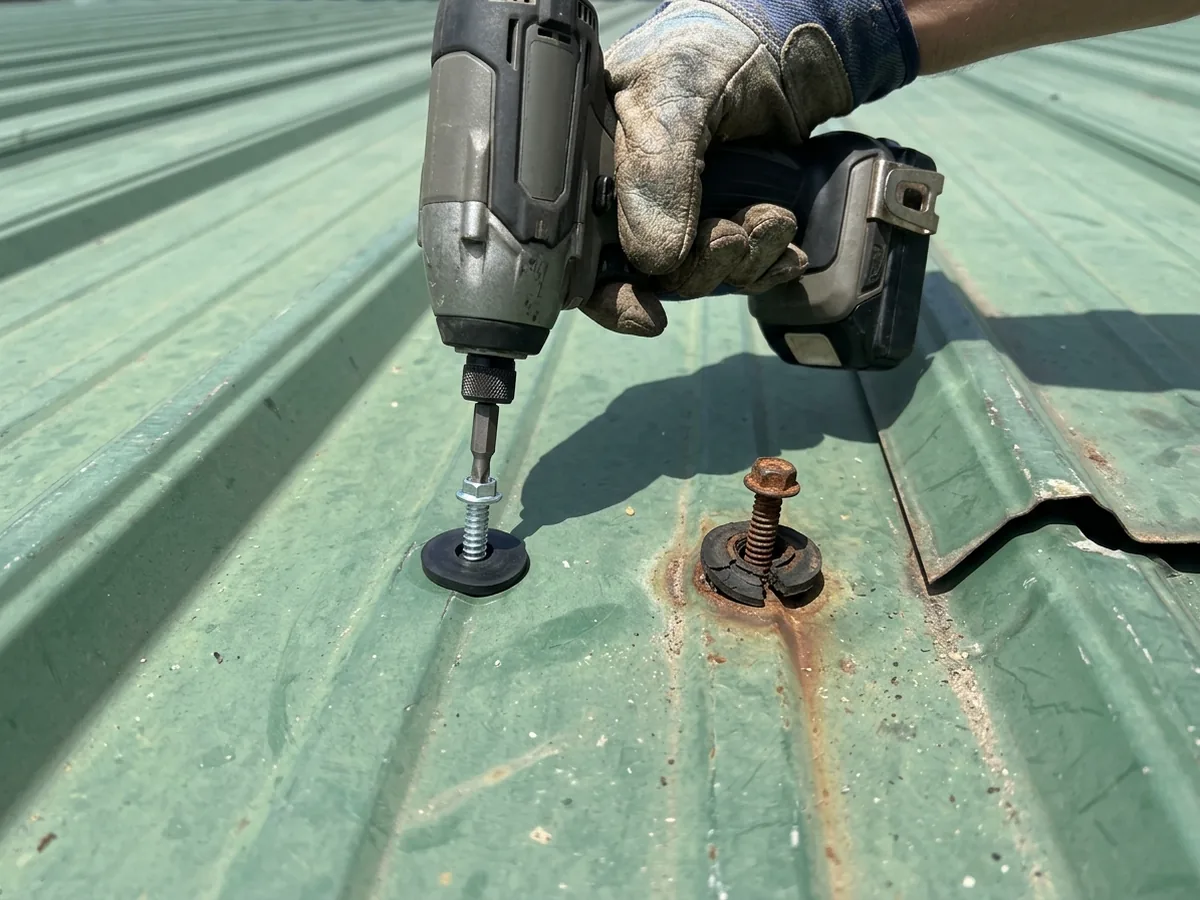
On an exposed-fastener roof, every screw is a small hole sealed by a rubber washer. That washer only works if the screw went in straight and to the right depth. Driven too deep, the washer squashes out past the head and lets water in. Driven too shallow or at an angle, it never seals. And as the panels heat and cool, the movement can push screws back out of their holes.
Panel laps are the other usual spot. Where one ribbed sheet overlaps the next, sealant or tape keeps water out of the joint. When that sealant dries out or cracks, water can get in at the lap. The fix is to clean the lap and reseal it, usually with a silicone sealant or sealant tape, then re-fasten it.
Flashing, Pipe Boot and Chimney Leaks
Flashing leaks look like screw leaks from inside the attic, which is why the contractor traces them before fixing anything. The usual suspects:
- Pipe boots. The rubber collar around a plumbing vent cracks, splits from the panel or breaks down in the sun. A new boot is sealed to the panel and screwed down around its base.
- Chimneys. Counter flashing pulls out of the mortar joint, or the sealant behind the chimney fails. The contractor reseals or replaces the piece that failed.
- Walls and skylights. Sidewall and headwall flashing loosens or was never lapped right.
This page is about fixing flashing that's already on the roof. New flashing and trim pieces, and how each should be detailed, are on our flashing and trim page.
Fastener Replacement
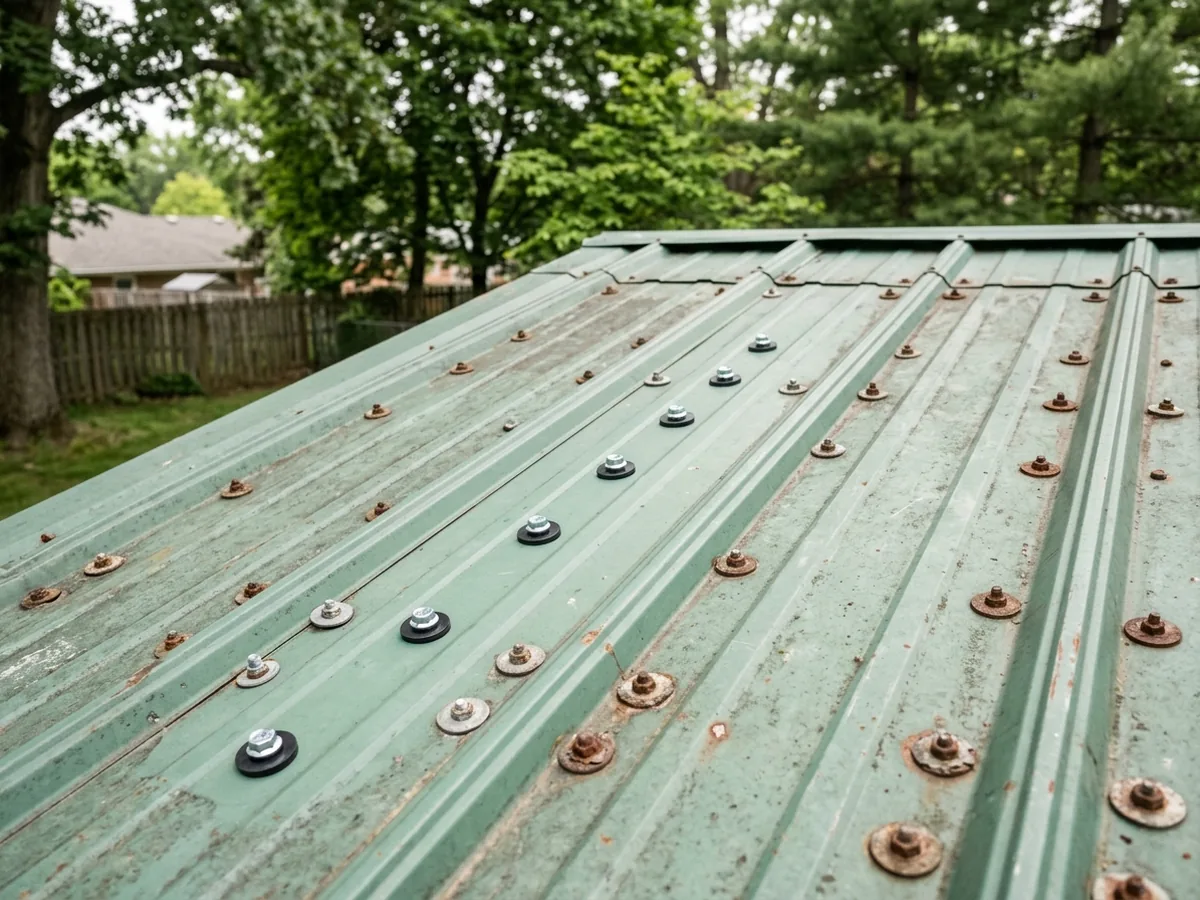
Screws and washers wear out long before good steel panels do. SFS, a fastener manufacturer, says to assume metal roof screws older than about 20 years are on borrowed time, and that most won't safely make it past 30. It recommends inspecting them twice a year and after any hail, snow or wind event.
A replacement screw goes in one size wider than the original so it cuts new threads in the old hole. SFS gives the example of swapping a #14 screw for a #17. Reusing the same size leaves a loose screw in a stripped hole that will back out again.
Whether to swap a few or re-screw the whole roof depends on how many washers have failed. Our view: if you're finding cracked washers on every slope, do the whole roof at once rather than call someone back each spring.
Rust Spot and Cut-Edge Repair
Most steel roofing has a Galvalume or galvanized layer under the paint, and that layer still protects the steel when the paint is only scratched. One panel maker's advice is to leave a paint-only scratch alone, since touch-up paint fades and chalks faster than baked-on factory paint and can end up more visible than the scratch.
Where the scratch, dent or cut edge goes down to bare steel, it needs treatment. AEP Span's guidance is to sand the edges, prime bare steel with a zinc-rich primer, then touch up sparingly with a paint pen or a narrow artist's brush. Surface rust gets the same steps after the rust is sanded off. Panels rusted through get replaced. When rust and chalking are spread across the whole roof, a full metal roof coating may make more sense than spot repairs.
Panel Replacement after Hail, Wind or Tree Damage
Wayne County logged 132 thunderstorm wind reports from 2015 through 2024 in NOAA's storm records, and 23 hail reports. For a torn or creased panel, a lifted edge, or a dent deep enough to crack the paint, we'd expect a new panel rather than a patch.
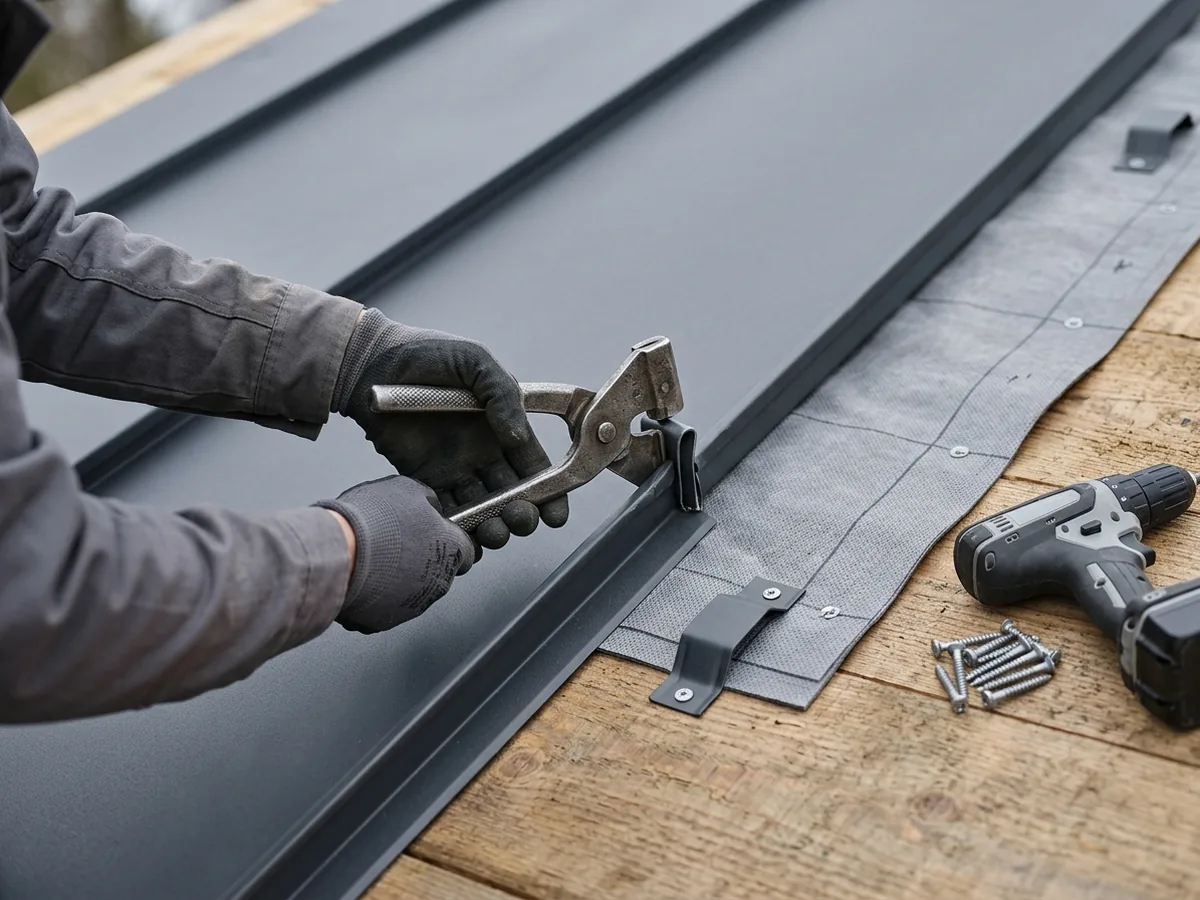
On exposed-fastener roofs, the old panel is unscrewed and a new one is lapped in under the neighbors on each side. Standing seam is slower, because the seams have to be opened. A single-lock seam is easier to open than a double-lock one. Matching the profile, gauge and colour is the hard part on an older roof, so ask the contractor where the new panel will come from before you agree to the work.
For storm damage, take photos before anything is moved and call your insurer early. What an impact rating means is explained on our stone-coated steel roofing page.
Why Livonia homeowners call Livonia Metal Roofing
- Estimate in writing, at no cost
- Gauge, panel profile and paint finish named in the quote
- Re-roof permit listed in the written scope
- One independent local metal roofer per request
- Homeowners pay nothing for the referral
When Repair Stops Making Sense
A repair is the right call when the panels are sound and the leaks come from screws, laps, boots or flashing. It stops paying when:
- rust has gone through the steel in more than a few spots
- the deck under the panels is soft or delaminated
- the same roof needs a callback every season and the washers are all the same age
At that point the choice is between a metal roof coating over sound but tired panels and metal roof replacement. A yearly check catches most of these problems while they're still cheap; see inspection and maintenance.
Cost and How a Repair Visit Runs
HomeGuide's 2026 national guide puts an average metal roof repair at $300 to $1,500. A leak that's hard to trace costs more, because finding it takes time.
Livonia Metal Roofing connects you with one independent local contractor; we don't do repairs ourselves. A typical visit goes like this:
- 1
Inside first
The contractor looks at the stain, then checks the attic, since water on a metal roof can run along a rib or purlin before it drips. - 2
On the roof
Screws, washers, laps, boots and flashing around the leak are checked, along with the slope above it. - 3
A written quote
It should say what failed, what gets replaced and with what size of screw or type of sealant. - 4
The repair
Small jobs don't usually need a city permit; the City of Livonia exempts ordinary repairs. Bigger work is covered on our metal roof replacement page, along with how to check the contractor's Michigan licence.