
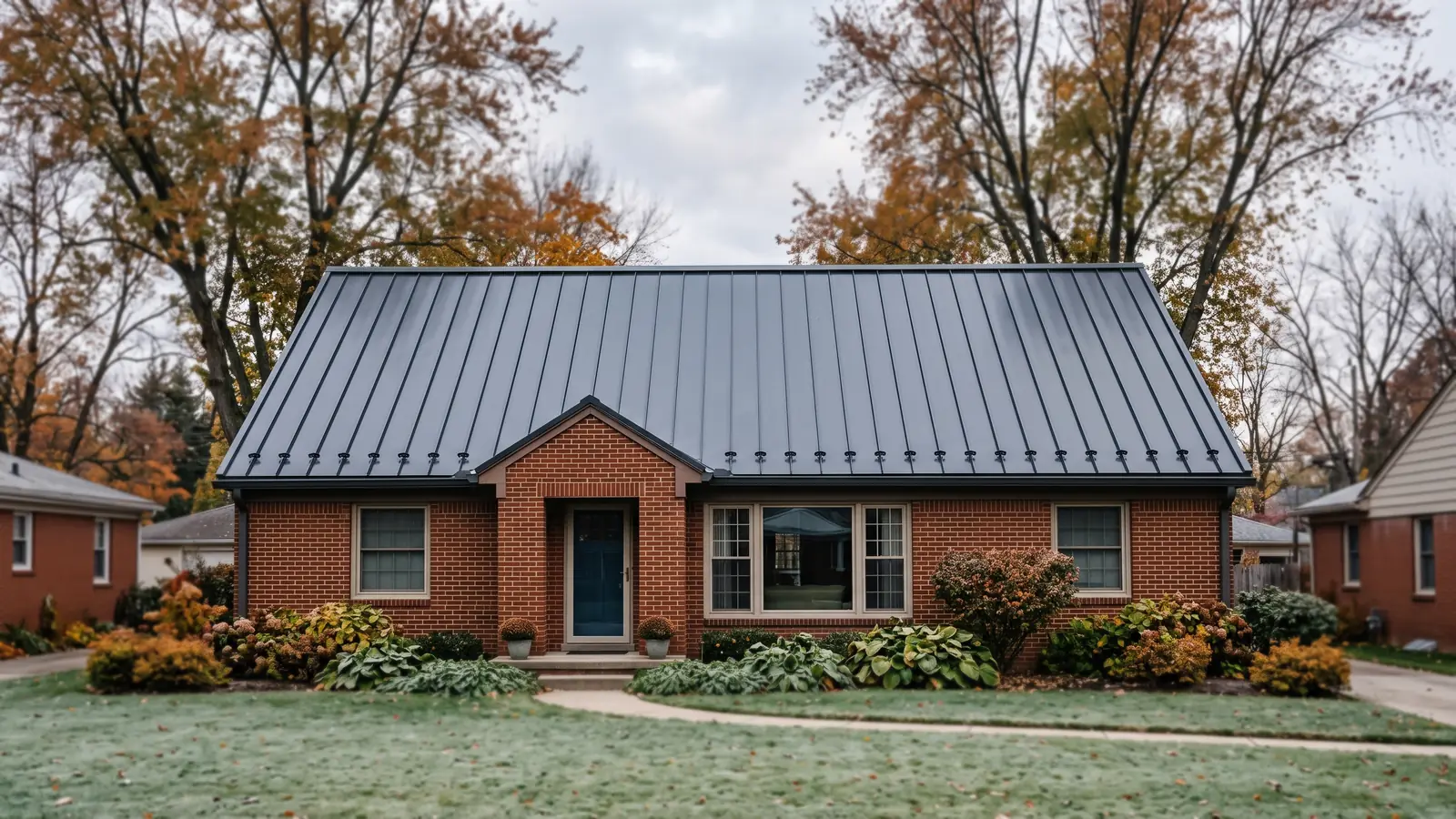
Metal Roof Replacement by Situation
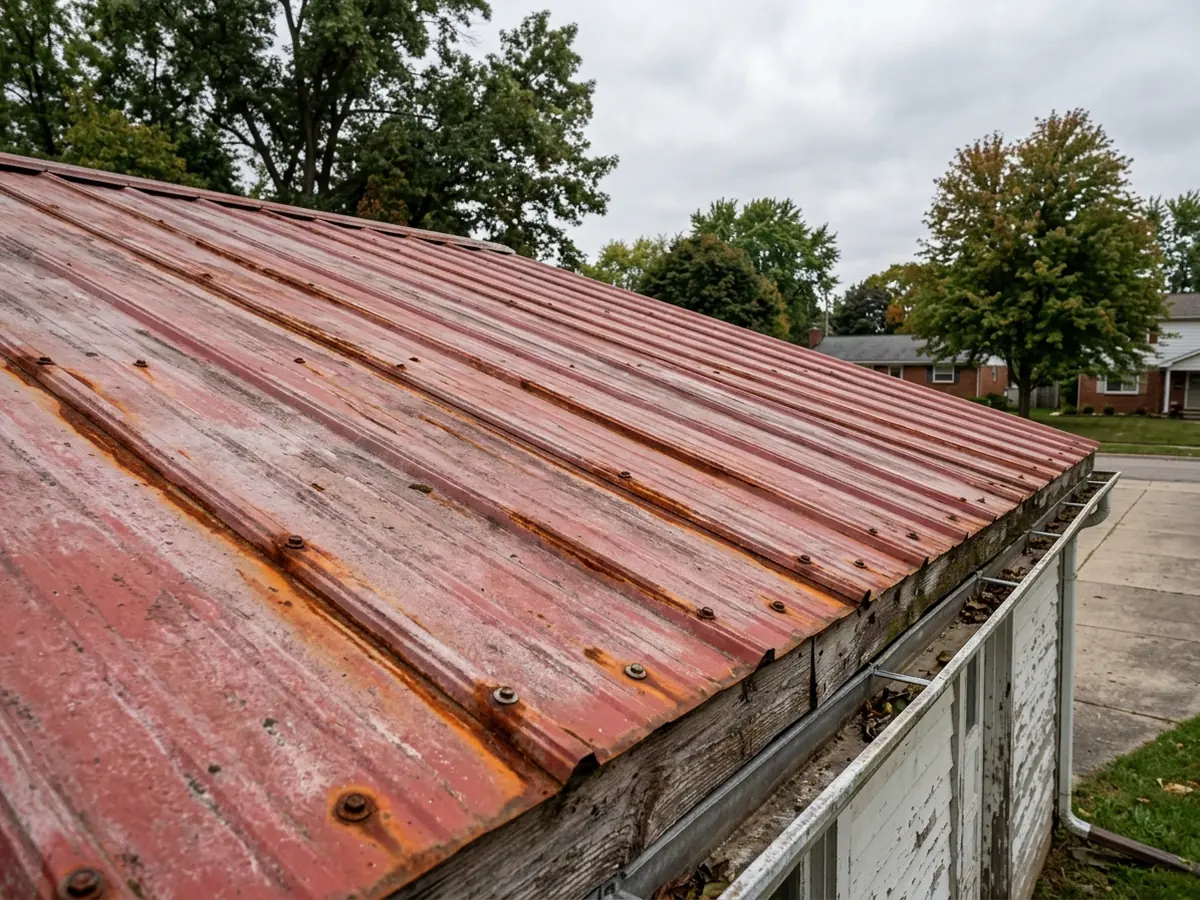
Rusted Exposed Fastener Roof Replacement
Steel roofing rusts where its zinc or aluminum-zinc coating is worn, scratched or cut. The National Park Service's guide to historic roofing puts it plainly: steel and iron are protected only while the coating stays intact, and once it's worn, the exposed metal rusts.
The question for an old ribbed roof is how far the rust has gone. Surface rust and chalky paint on sound steel can often be treated and coated instead; see metal roof coating. Rust that has eaten through the panel, flaking laps, or screws that spin in rotten holes mean new panels. A single leaking screw or lap is a metal roof repair, not a replacement.
On a replacement, rusted trim, vent flashings and edge metal come off with the panels; the code doesn't let rusted flashings be reused on a re-roof (the rule is on our metal roof over shingles page).
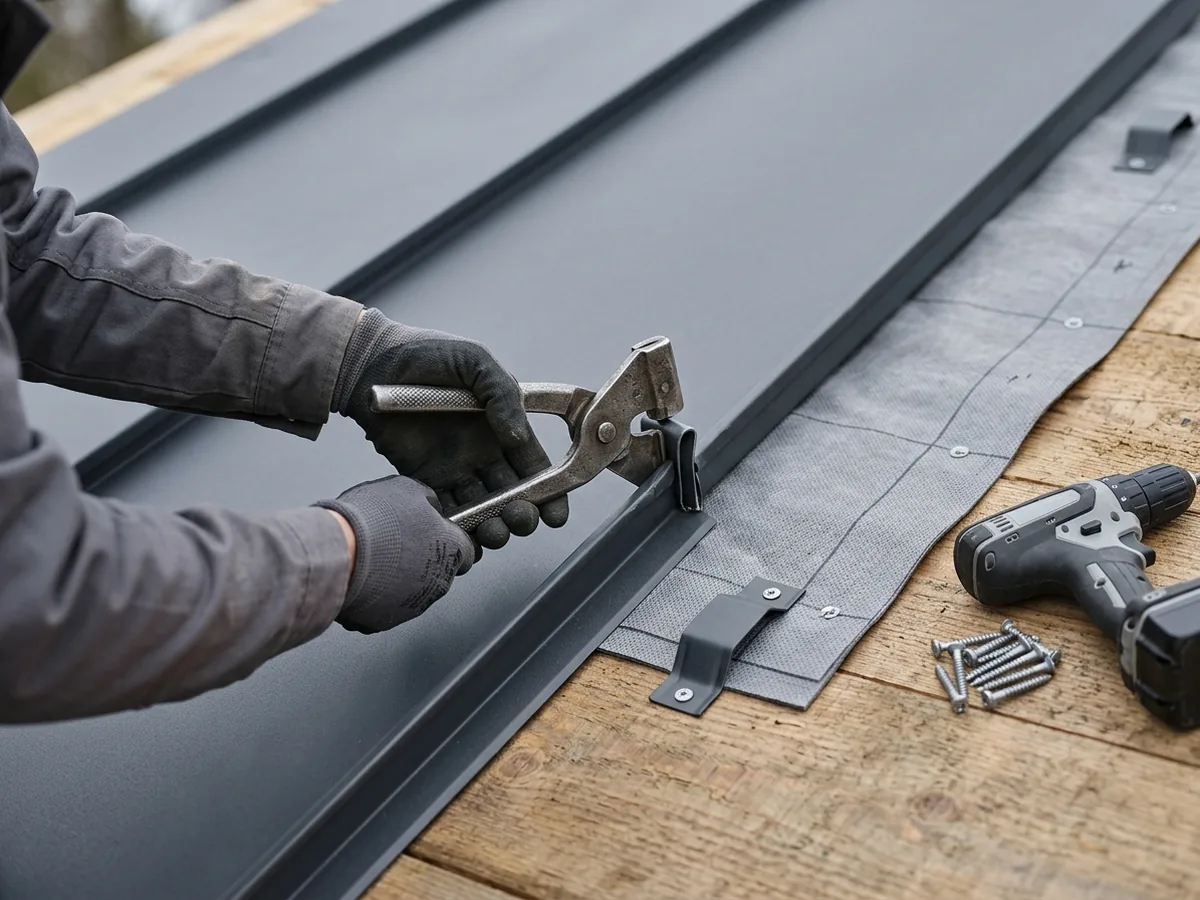
Upgrading to Standing Seam
Replacing a ribbed roof is the natural time to move to standing seam: no exposed screws, clips that let the panels move, and a cleaner line from the street. It changes what goes underneath. Residential snap-lock panels are made for a solid deck. One maker's 1-inch snap-lock panel, for example, lists solid deck installation and a 3:12 minimum slope. A ribbed roof on purlins or skip sheathing needs a solid deck added first when the new panel calls for one.
A new deck also gets a new ice barrier at the eaves and new underlayment, which an old ribbed roof on purlins may never have had; see metal roof underlayment and ventilation. And standing seam sheds snow faster than many owners expect. If the roof drains over a door, walk or driveway, price snow guards into the job.
Profiles, seam types, gauges and finishes are compared on our standing seam metal roofing page. If the old roof is shallow, check the code minimum for each panel type on the low-slope metal roofing page before picking one.
Old Tin and Terne Roof Replacement
"Tin roof" usually means one of two old materials. The National Park Service describes tin plate as iron coated with tin, and terne as iron dipped in a lead-tin alloy, and notes that even historical records mix the two up. Tin roofs were kept well painted, usually red.
The Park Service also lists the modern stand-ins: terne-coated steel and aluminum-zinc coated steel (Galvalume) can successfully replace tin and terne plate. Painted Galvalume standing seam is one way to keep the look of an old tin roof. HomeGuide's 2026 national guide puts tin (terne) roofing at $600 to $1,800 per square installed if you want the real thing.
Terne contains lead. Ask the contractor how the old sheet will be removed, bagged and disposed of, and keep children and pets clear of the scrap pile.
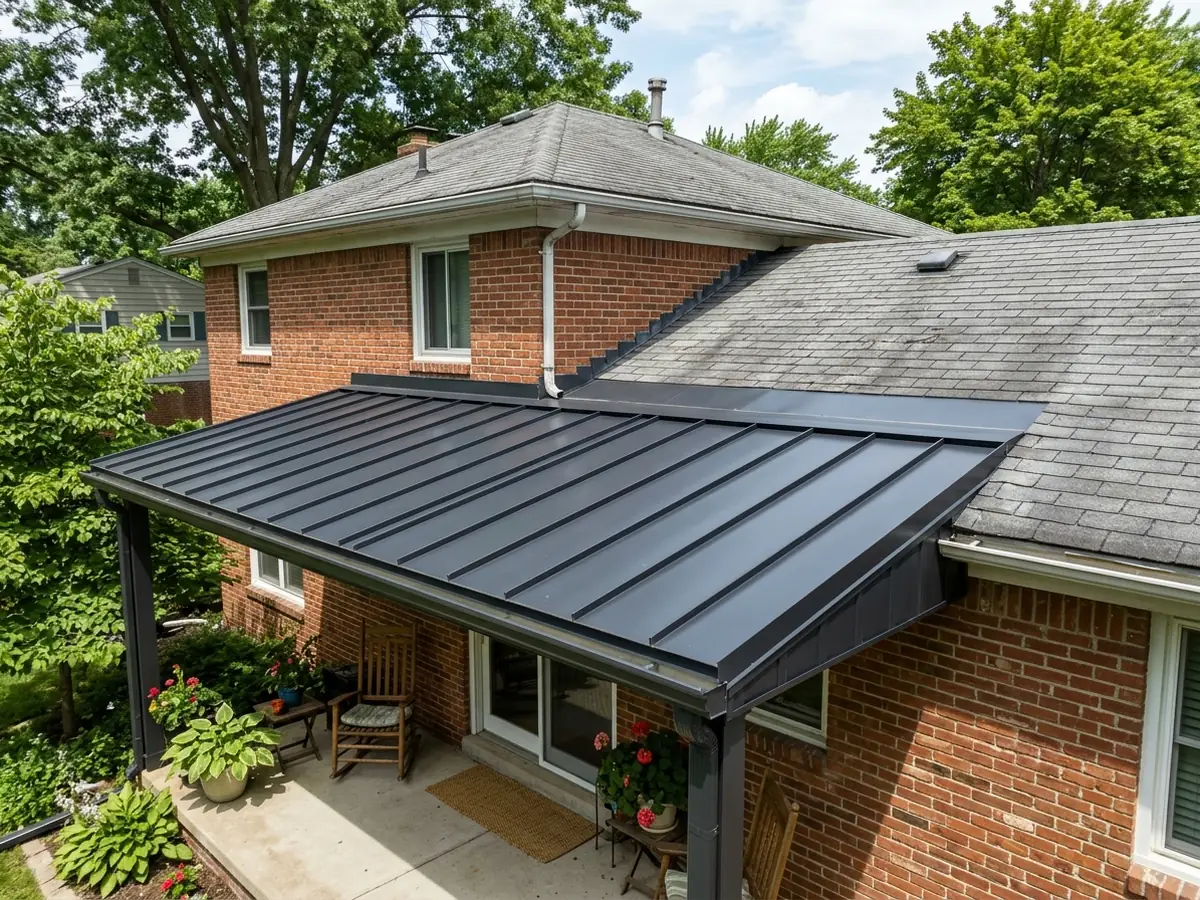
Partial Replacement (One Slope, Porch or Addition)
Sometimes only one part has failed: the south slope that takes the sun, a porch roof with ponding, an addition built later with a different panel. Replacing just that part is fair, with two catches.
First, the joints. The Michigan Residential Code calls for flashing at every wall-and-roof intersection, wherever the slope or direction changes, and around roof openings (R903.2.1). A partial job is mostly joints, so most of the labor is flashing. Second, matching. Panel profiles get discontinued and paint fades, so new panels next to old ones rarely match exactly. A porch or addition is often the place to switch to a contrasting colour rather than chase a match. If the rest of the roof is close to the end too, price both options: one slope now and the rest later can cost more in total, since setup, trim and the permit are paid twice. See metal porch roofs for the porch side of it.
Why Livonia homeowners call Livonia Metal Roofing
- Estimate in writing, at no cost
- Gauge, panel profile and paint finish named in the quote
- Re-roof permit listed in the written scope
- One independent local metal roofer per request
- Homeowners pay nothing for the referral
Permit, Code and Licence in Livonia
Michigan Still Uses the 2015 Residential Code
Michigan's Bureau of Construction Codes lists the 2015 Michigan Residential Code as current, effective February 8, 2016. The 2021 update was set to take effect on August 29, 2025, but a court order issued July 7, 2025 keeps the 2015 residential code in effect while that order stands. Every code section on this site refers to the 2015 edition.
Livonia Building Permit
The City of Livonia's Inspection FAQ says you generally need a building permit whenever you construct, enlarge, alter, repair, move, remove, improve, convert or demolish a building or other structure. Its permit information sheet adds that ordinary repairs don't need one. Most permits have a lead time of about two weeks, and inspections are booked through BS&A Online.
Fees follow the job's value. On the city's schedule effective December 1, 2024, a $15,001 to $16,000 job carries a total fee of $283, and a $30,001 to $31,000 job $466.
The city's own pages state the general rule, not a roof-specific one. A Michigan roofing contractor's blog lists Livonia among the cities that require a permit to replace a roof; we haven't seen that in writing from the city. A full metal roof replacement is well past an ordinary repair, so plan on a permit, and confirm with the Livonia Inspection Department at City Hall Annex before work starts. Normally the contractor pulls it.
Checking the Contractor's Michigan Licence
Livonia's permit sheet says anyone building a residential structure must be licensed by the Michigan Department of Licensing and Regulatory Affairs (LARA). Roofing is one of the trades on LARA's maintenance and alteration contractor licence. Under state law a licence is required unless the whole project, labor and material, comes to under $600, and applicants complete 60 hours of approved pre-licensure education.
Look the contractor up in LARA's licence search before you sign, and check that the name on the licence matches the name on the contract.