
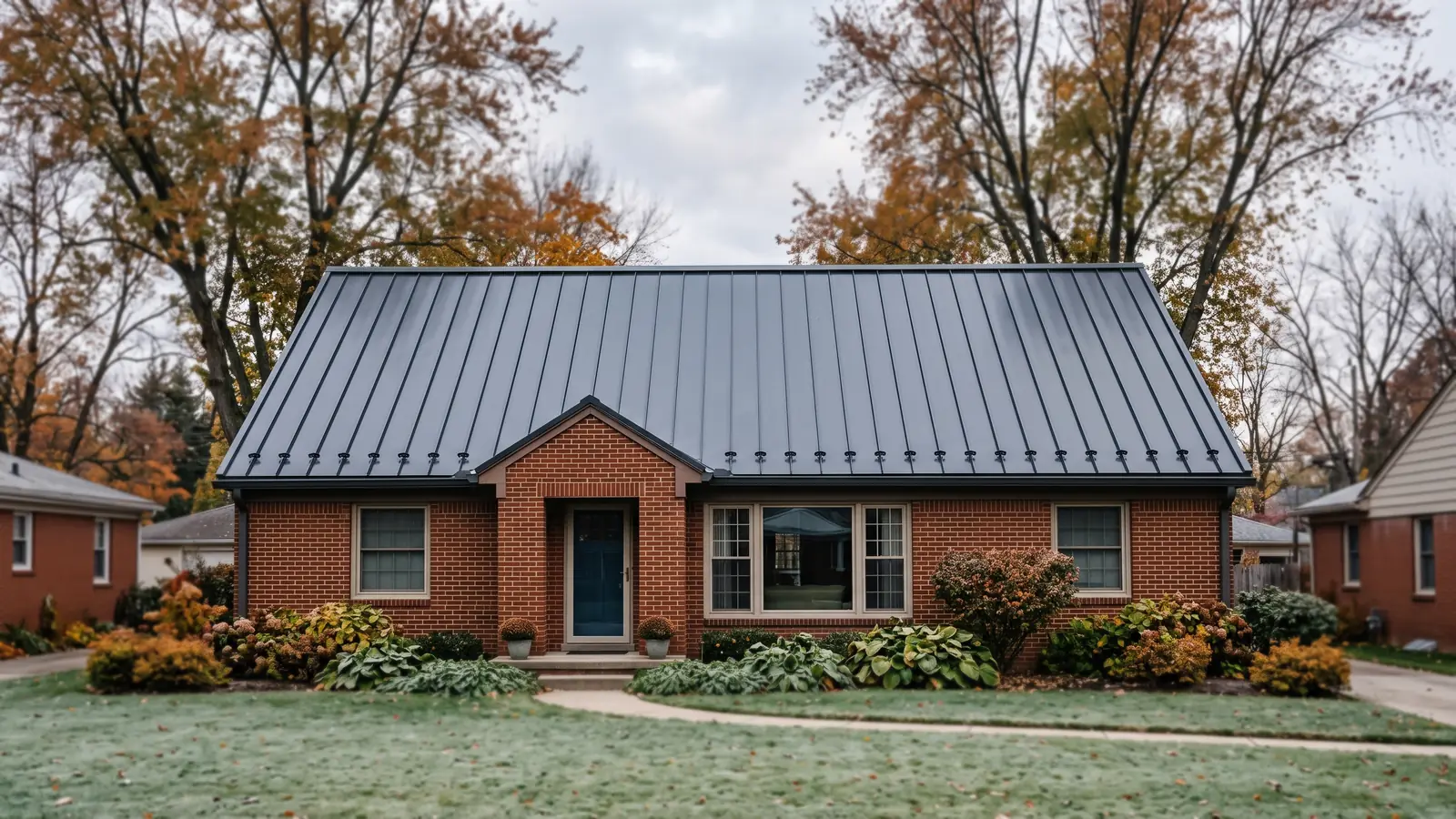
Copper Gutter Styles and Parts
HomeGuide names K-style and half-round as the two most common copper gutter shapes. Downspouts and conductor heads finish the system.
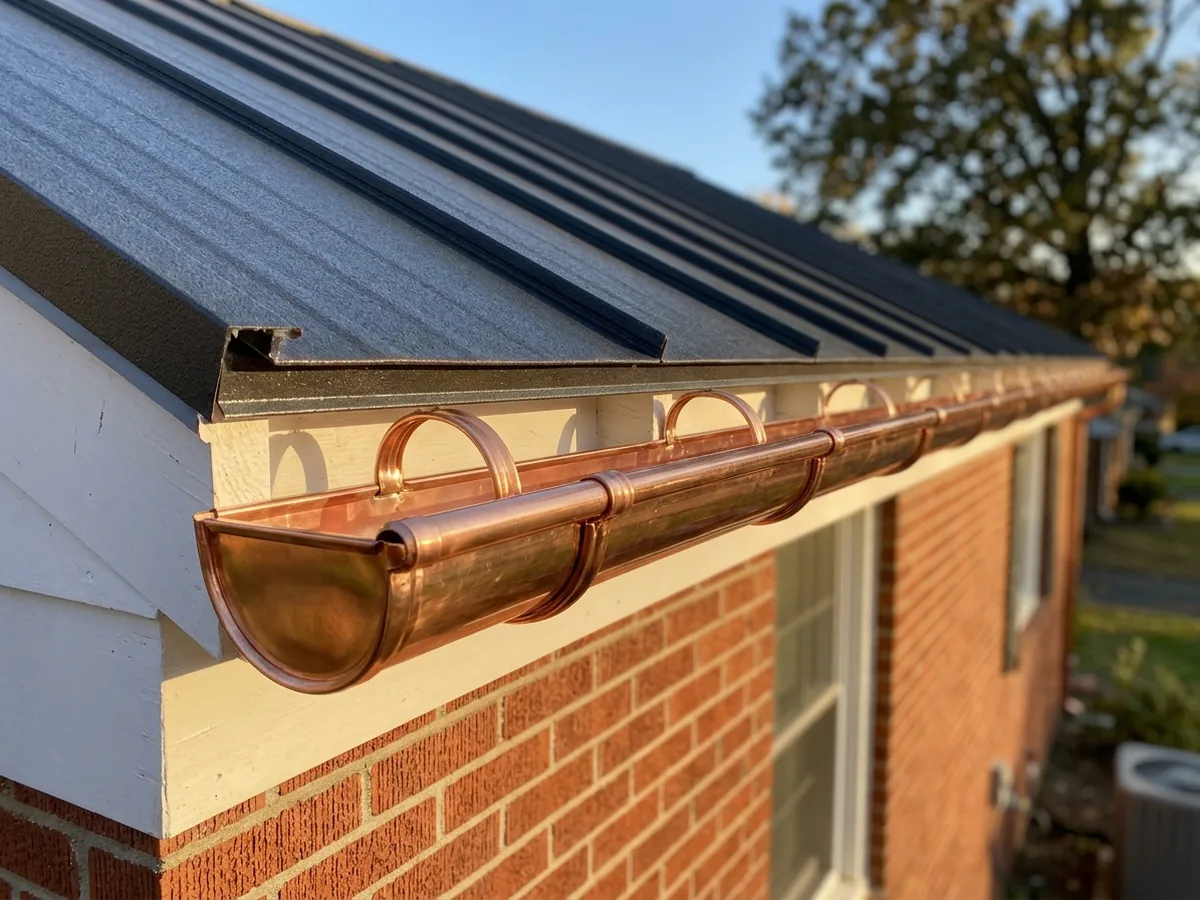
Half-Round Copper Gutters
A half-round gutter is a half-circle in section, the shape you see on older and historic homes. K&M Sheet Metal, which fabricates them, lists 5-, 6-, 7- and 8-inch sizes in 16- or 20-ounce copper (ounces per square foot of sheet). The 5- and 6-inch sizes are roll-formed from coil and can run long, while 7- and 8-inch gutters are made by hand in lengths of 19.5 feet. K&M's standard reverse-bead half-round is made from 16-ounce copper. The bead is the rolled front edge, and it comes turned inward or outward.
Half-round gutters hang from hangers under the eave rather than sitting flat on the fascia, so the hanger style and spacing are part of the look.
K-Style Copper Gutters
K-style has a flat back and a shaped front that reads like crown molding. HomeGuide calls it the most popular gutter shape in America for modern homes. The flat back mounts straight to a fascia board, which suits a ranch or split-level with a plain fascia.
Seamless K-style is formed on site by a machine, one continuous length per side of the house. HomeGuide says it takes more labor to install but needs less maintenance. Sectional K-style comes in pieces that are soldered together. HomeGuide notes that sectional runs are more prone to clogs and leaks along their seams.
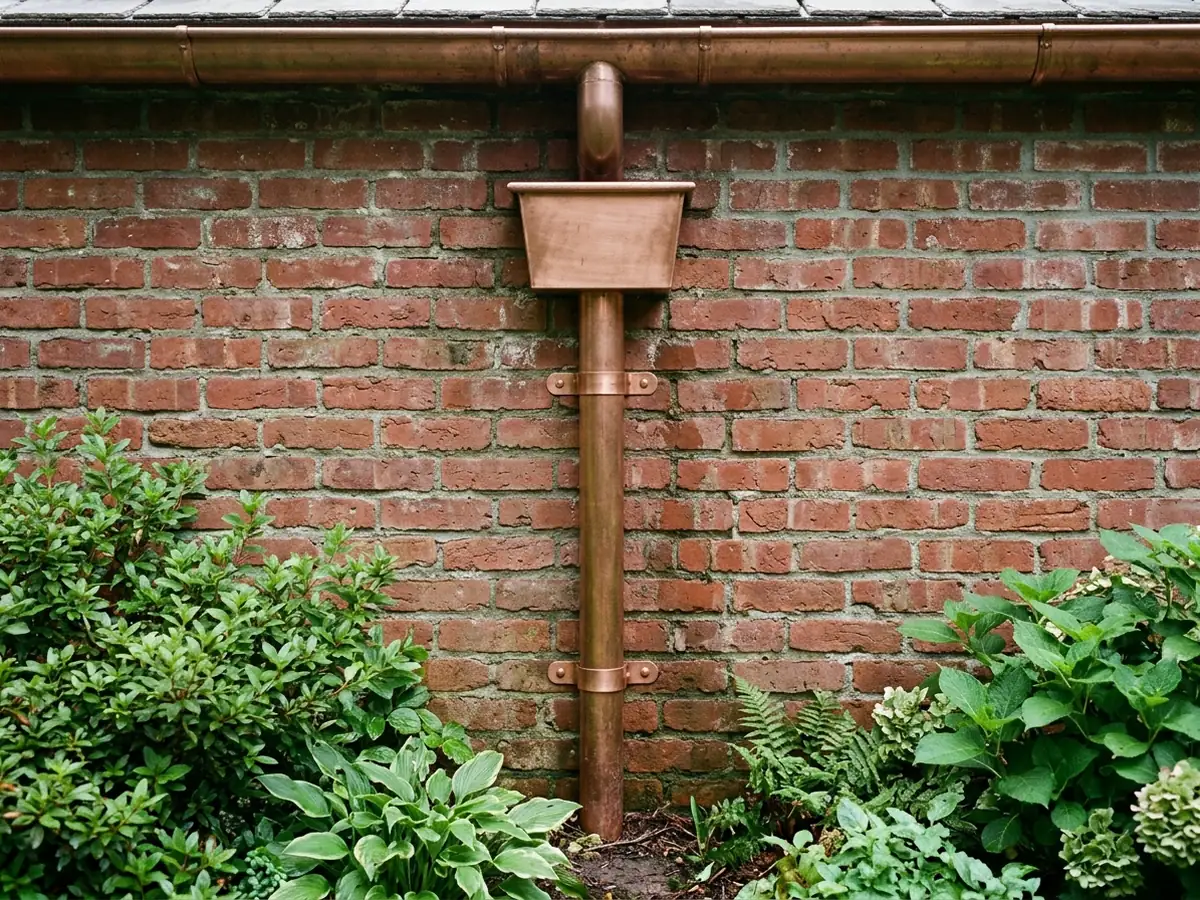
Copper Downspouts and Conductor Heads
Copper downspouts come round, square, corrugated and decorative, usually 3 to 6 inches across. HomeGuide's rule of thumb is one downspout for every 30 to 40 feet of gutter. A conductor head is the open box at the top of a downspout that collects water from a gutter outlet or a wall scupper.
The downspout's job ends at the ground. Water should be carried away from the foundation with extensions or splash blocks, which matters on any house with a basement.
Gutters Under a Metal Roof
Snow slides off steel in sheets, and Ceco Building Systems lists fascia and gutters among the things sliding snow damages. Snow guards hold the pack above the eave so it melts off in stages. They're on our snow guards for metal roofs page, along with heat cable. Easy Heat's guide runs that cable through the gutter at 1 foot of cable per foot of gutter, two runs in gutters wider than 6 inches, and loops it down and back up each downspout, so the gutter's size and hangers have to suit the cable too. The same guide warns that ice building up in a gutter can stress it enough to make it fail, which is the other reason to deal with ice at the eave.
Material matters too. Copper next to Galvalume, zinc or galvanized steel, by contact or by runoff, needs care; the rules for mixing metals are on our copper roofing page. Under a painted steel roof, a steel or aluminum gutter in a matching color is the simpler choice. Copper fits best under a copper bay roof or as a deliberate accent. Copper bay and bow window roofs, which often get half-round copper gutters, are on our metal porch roofs page.
Why Livonia homeowners call Livonia Metal Roofing
- Estimate in writing, at no cost
- Gauge, panel profile and paint finish named in the quote
- Re-roof permit listed in the written scope
- One independent local metal roofer per request
- Homeowners pay nothing for the referral
Copper Gutter Cost
HomeGuide's national 2026 guide puts installed copper gutters at $15 to $40 per linear foot, or $2,200 to $6,000 on average. That price includes downspouts, hangers and labor. HomeGuide doesn't price Livonia on its own, so the contractor's measured quote, by linear foot of gutter and downspout, is the number that counts. Where a job falls in that range depends on a few things HomeGuide names:
Seamless or sectional
Seamless costs more per foot.Weight
20-ounce copper costs more than 16-ounce.Size
Most homes take 5- to 7-inch gutters; bigger houses with heavy runoff may need 8-inch.Downspouts
Count, length, and how far they carry water from the foundation.Height
Two-story walls need more downspout and more safety setup.Old gutter removal
Often folded into the labor price.
Sizing, Joints and Hanging
The gutter size follows the roof area that drains into it and the local rainfall. A long, steep slope feeding one run needs more capacity than a short porch roof. K&M joins lengths by soldering where possible, and with rivets and sealant where it isn't; ask which your contractor will use, and how many joints each run has.
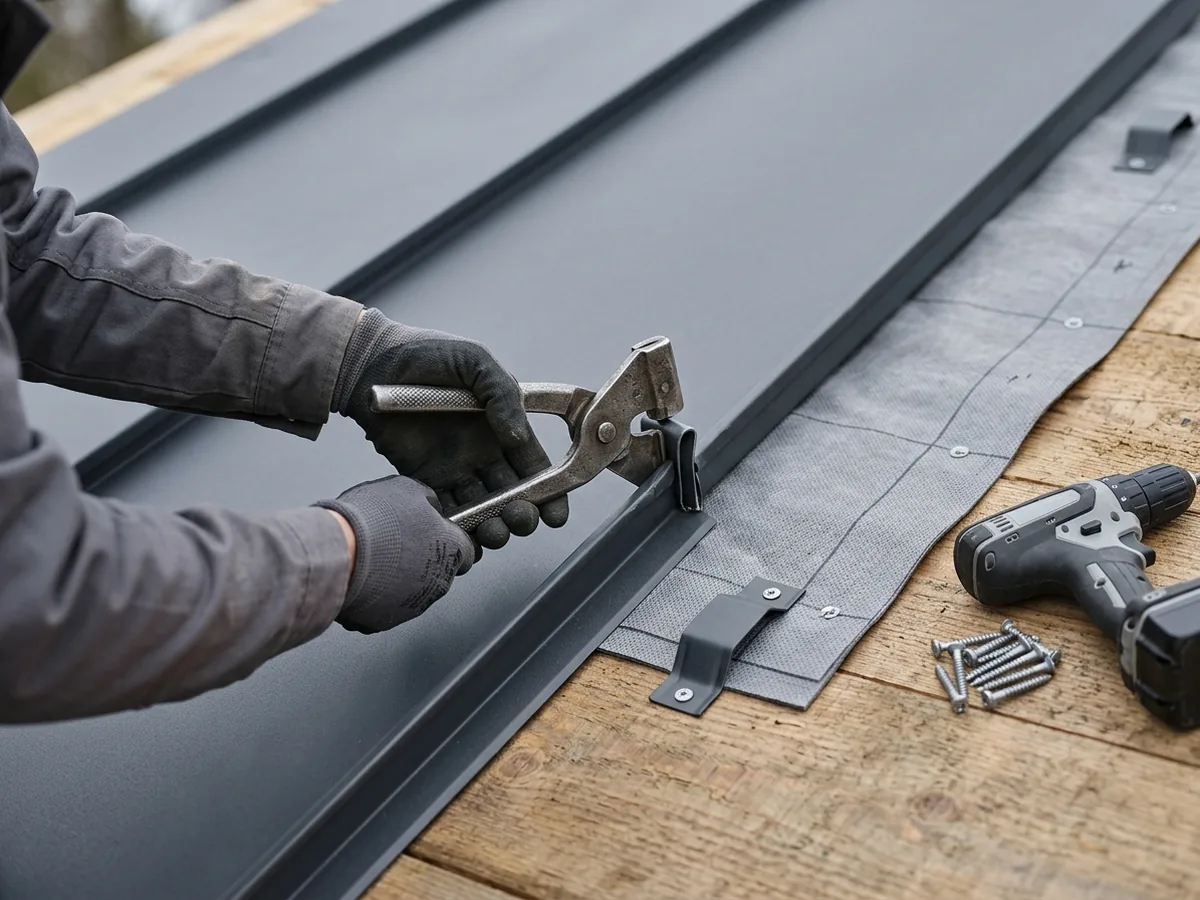
Fasteners matter on copper. For copper roofs, the Michigan Residential Code (R905.10.4) calls for copper, brass, bronze or 300-series stainless steel fasteners, and the same logic applies to gutter hangers and straps: a plated steel screw in a copper gutter is a corrosion point. Hangers go into the rafter tails or fascia, closer together under metal, where snow and ice add load. The contractor sets the gutter's pitch toward each outlet so water doesn't sit in the trough. The trim the gutter hangs below, including drip edge and eave trim, is covered on our metal roof flashing and trim page.
What to Ask Before You Hire
How the joints are made
Soldered, or riveted and sealed.- Hanger type and spacing, and what metal the hangers and screws are.
- Where each downspout discharges, and how far from the foundation.
- Whether the fascia gets checked once the old gutters come off.
For a house with a metal roof
Snow guards above the gutter, and heat cable if ice is a known problem.