
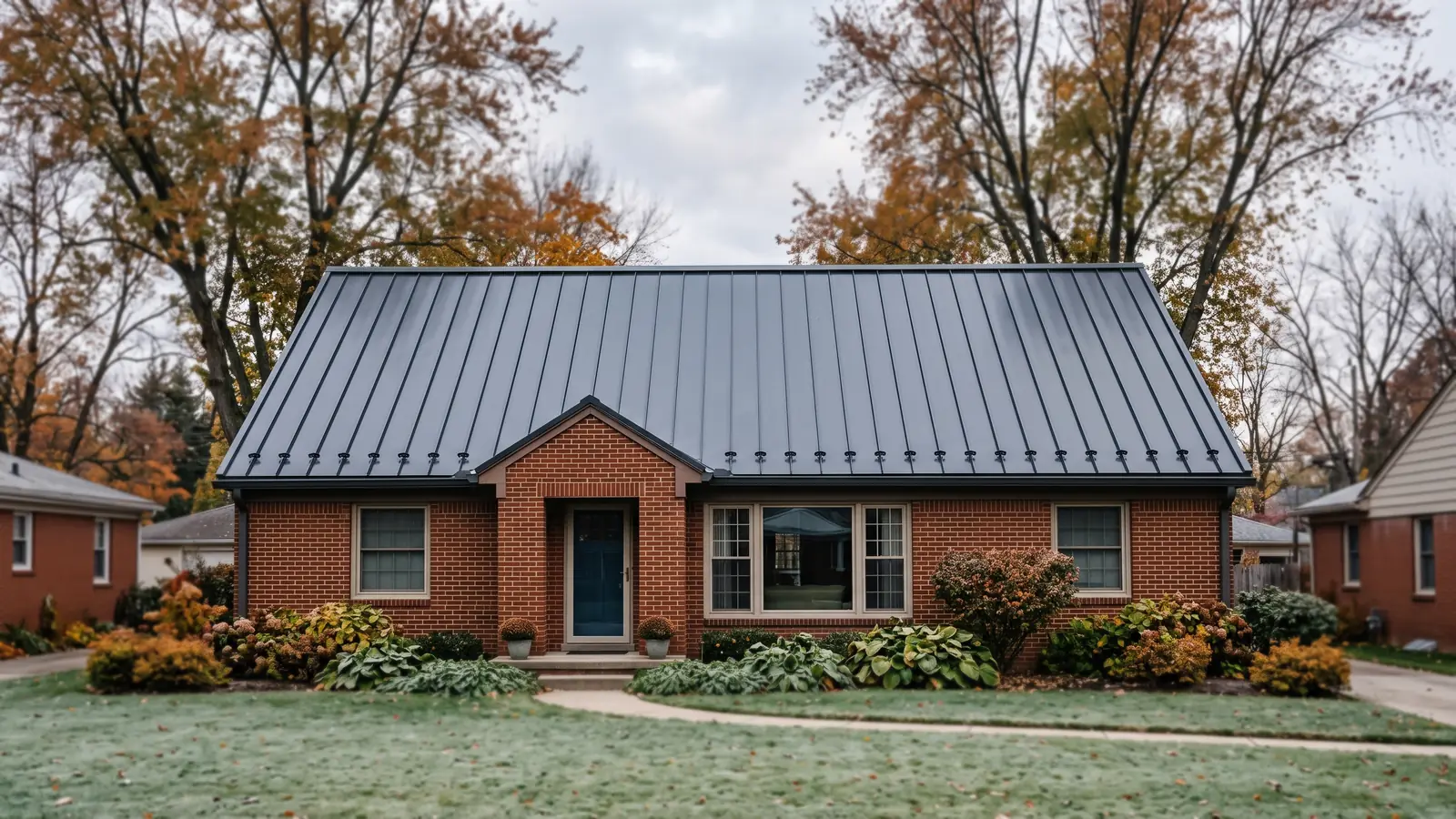
Copper and Zinc Roof Types
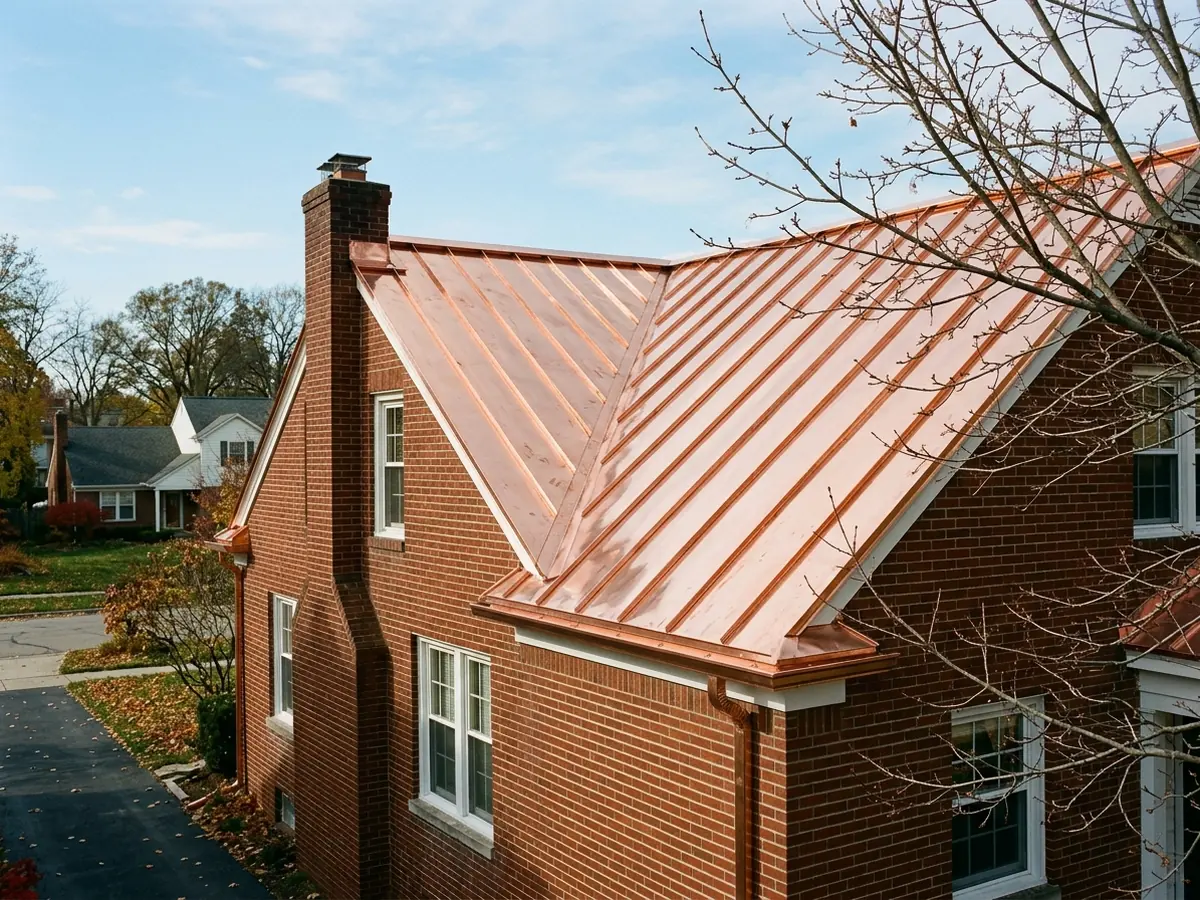
Copper Standing Seam Roofs
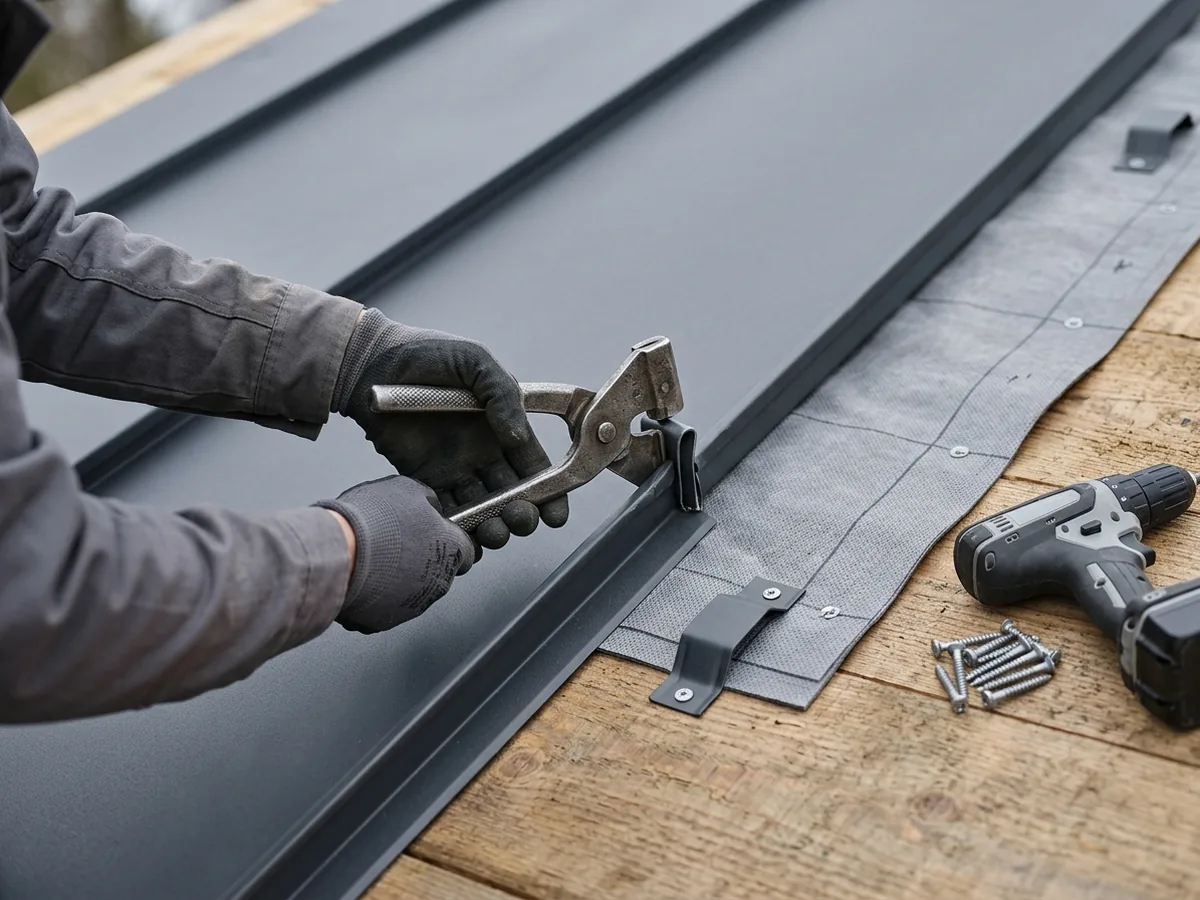
Standing seam is the most common way to build a copper roof, according to the RICOWI copper roof guide published by IBHS. Sheets of copper are formed into long pans with raised edges, the edges are locked together, and copper or stainless cleats hidden inside the seams hold the pans to the deck. Nothing goes through the face of the sheet.
The Michigan Residential Code sets the floor at 16-ounce cold-rolled copper (ASTM B370) for sheet roofing. Heavier 20-ounce sheet is the other common weight. IBHS puts a finished copper roof at roughly 123 to 190 pounds per 100 square feet, depending on seam style and sheet weight.
Through-fastened copper, a corrugated sheet screwed through the face, does exist. The IBHS guide calls it rare and something installers avoid, because every screw hole turns into a leak point as the copper grows and shrinks with the seasons. If a quote shows exposed screws on copper, ask why.
HomeGuide's 2026 national figures put standing seam in copper or zinc at $11 to $32 per square foot installed.
Flat-Lock Soldered Copper
On a slope too low for standing seam to shed water quickly, copper goes on as flat seam roofing. Small sheets with folded edges hook into each other, lie flat on the deck, and every seam gets soldered. IBHS lists flat seam in two forms: unsoldered for steeper roofs and soldered for low ones. A soldered flat-seam roof works as one continuous skin, which is why it's the old answer for a nearly flat bay roof or a built-in gutter.
The solder joints are where the skill goes. IBHS warns that old copper can't simply be resoldered: it has to be fully deoxidized, pre-tinned and fluxed first, which limits patch repairs and sometimes means replacing a section instead. The code's minimum pitch for each kind of metal panel is on our low-slope metal roofing page.
Copper Accent Roofs
Most Livonia houses won't get a whole copper roof. They get copper where people see it up close: a bay or bow window, an entry roof, a small dormer, with shingles or painted steel on the main roof. The build is the same as a full copper roof at a smaller scale, standing seam or flat-lock depending on the pitch. The hard part is where it meets the house. Step and counter flashing at the wall has to be copper too, or kept apart from the copper by a separator. Bay, bow, dormer and entry roofs as structures are covered on our metal porch roofs page.
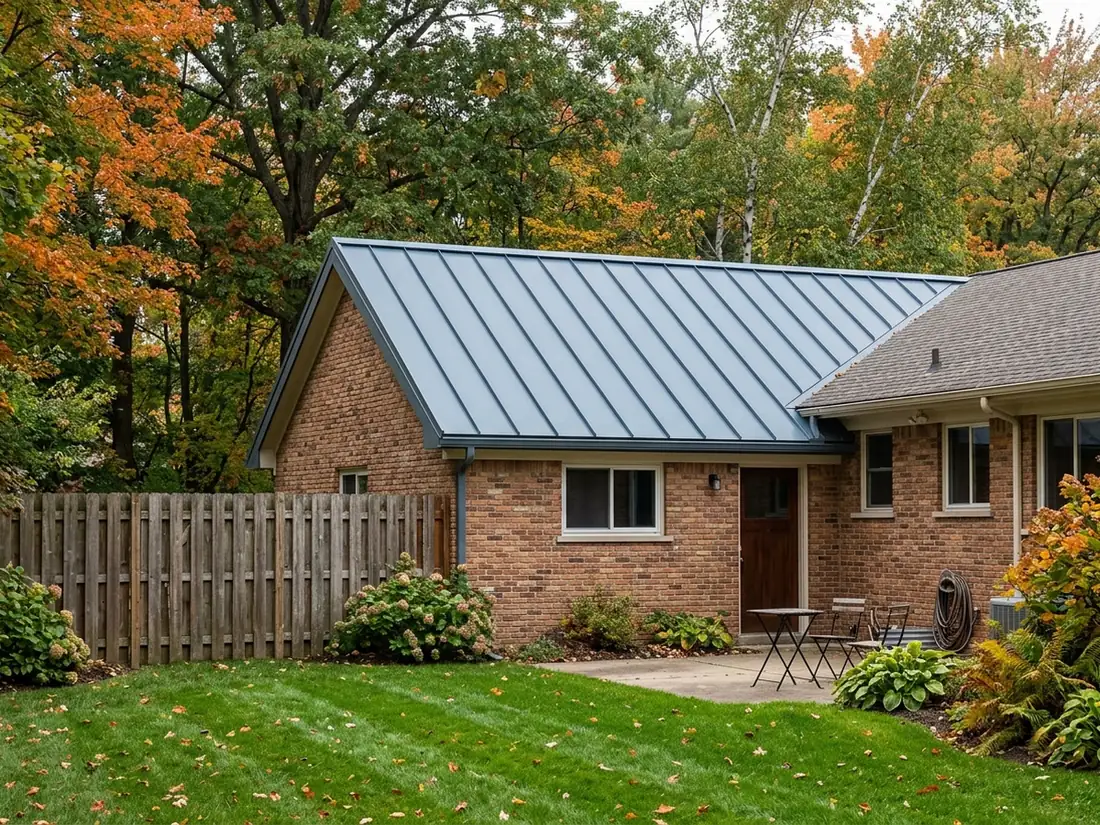
Zinc Standing Seam Roofs
Zinc goes on much like copper: formed pans, locked seams, concealed clips. The code's minimum is 0.027-inch sheet of high-grade zinc alloyed with small amounts of copper, titanium and aluminum.
Zinc has one weak spot, and it's underneath. Engineers at Simpson Gumpertz & Heger, writing in Building Enclosure, report that zinc corrodes early when its back side sits against water with no air moving. They call an airspace the only proven fix: furring that lifts the zinc off the underlayment. A factory coating on the back helps but isn't the same thing. So ask how the quote handles the underside of the panels. The same article notes zinc only reached the U.S. market in the 1990s, though Europe has roofed with it for two centuries.
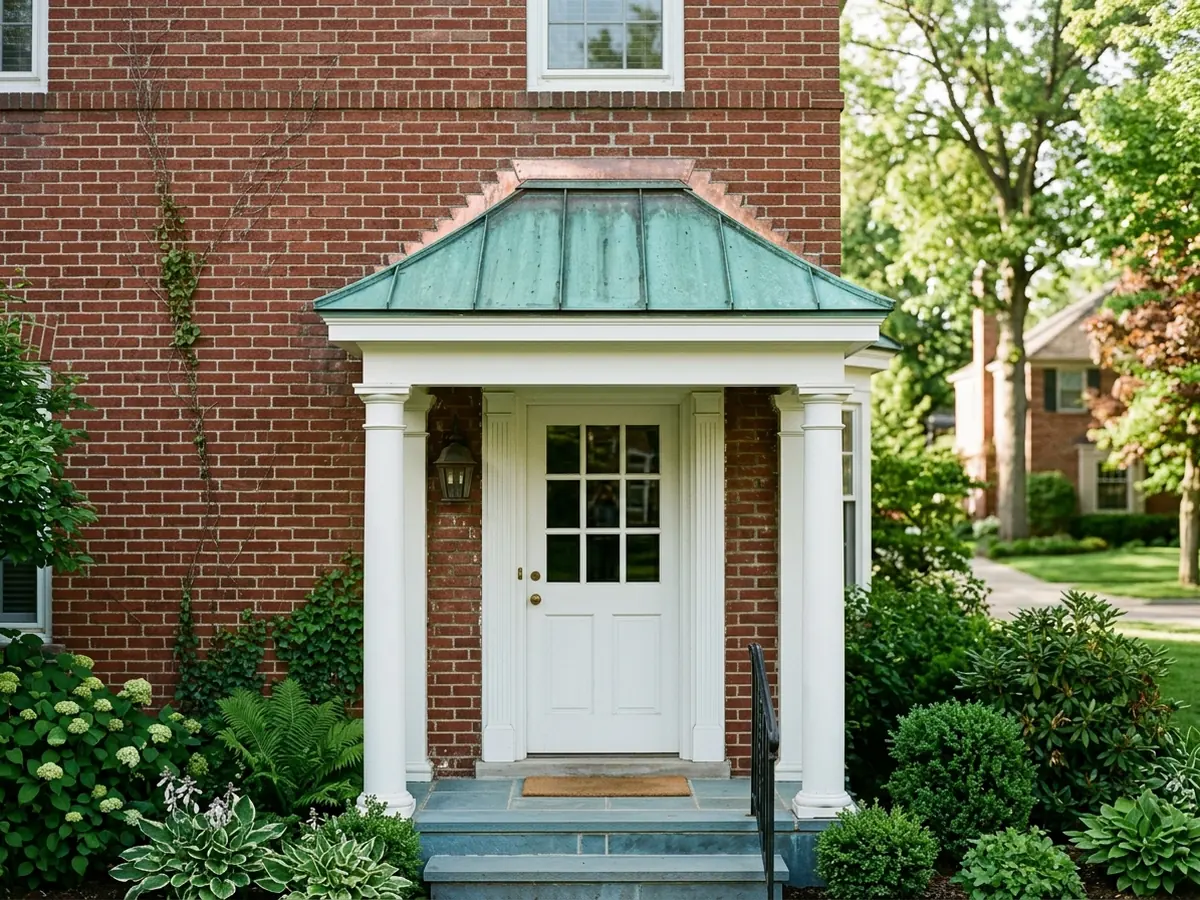
Pre-Patinated Copper and Pre-Weathered Zinc
Bare copper starts bright, then turns dark: black, grey and brown, and finally green. IBHS says full patina often takes about 25 years on a sloped roof, sooner in warm, humid air and on low slopes. Factory pre-patinated copper skips the wait because it arrives chemically weathered, brown or green. IBHS is wary of patina chemicals brushed on in the field, which give uneven results.
Zinc makers sell pre-weathered sheet in the soft grey that bare zinc takes years to reach. Either one makes sense when you're adding onto an older copper or zinc roof, since new bright metal won't match the old until it weathers.
Why Livonia homeowners call Livonia Metal Roofing
- Estimate in writing, at no cost
- Gauge, panel profile and paint finish named in the quote
- Re-roof permit listed in the written scope
- One independent local metal roofer per request
- Homeowners pay nothing for the referral
How Long Copper and Zinc Roofs Last
These two outlast nearly everything else on a house. The RICOWI guide says proper design and installation commonly let a copper roof work for over 100 years, and that copper roof systems often stay intact past 80. For zinc, HomeGuide gives 80 to 100 years. The Building Enclosure article is more cautious: it puts zinc at about 70 years in general, while noting some European zinc roofs still performing at 120.
Hail mostly leaves marks. IBHS says hail doesn't normally do serious damage to a copper roof. Small dents are cosmetic, and scuffed patina re-oxidizes and blends back in. Neither metal is painted, so there's no recoat cycle.
Our view: the 100-year number belongs to the whole assembly, not the metal alone. Cleats that let the sheet move, clean solder joints and compatible fasteners are what get a roof there.
Keeping Copper Away From Steel and Aluminum
The National Park Service's Preservation Brief 4 on historic roofing explains the problem: galvanic corrosion happens when dissimilar metals such as copper and iron touch. It can happen even when they don't touch, because rainwater carries the reaction from one metal to the other. Steel nails in copper sheet are its example.
The Michigan Residential Code makes this a rule. Copper roofs get copper, brass, bronze, copper alloy or 300-series stainless steel fasteners. On a real job that means:
- Copper or stainless cleats and nails, never galvanized.
- No copper runoff onto Galvalume panels, galvanized flashing or aluminum gutters downhill. A copper roof drains into copper gutters.
- A separator, such as a plastic or membrane layer, wherever copper has to sit against another metal.
- Snow guards, vent flashings and other add-ons that IBHS calls "galvanically compatible" with copper.
Things to Know Before a Copper or Zinc Roof
Snow still slides
Bare copper and zinc shed snow just as painted steel does. Where guards go and why is on our snow guards for metal roofs page. On copper, the guards themselves must be compatible metal.Ask about the eaves
The ice barrier that goes under a steel roof at the eaves belongs under copper and zinc too. See metal roof underlayment and ventilation.Permit and licence
Livonia's permit rules and how to check a contractor's Michigan licence are on our metal roof replacement page.Repairs need the same metal
A copper roof patched with steel or aluminum is set up to corrode at the patch.